

A focused desk declutter can change the way you work in far less time than you might expect. When papers pile up, cords tangle, and everyday supplies scatter across your surface, productivity drops and frustration grows. Many people assume organizing a desk takes an entire weekend, but with the right structure, you can restore order in about an hour and create a workspace that supports clear thinking and efficient routines.
Your desk is more than just furniture, it’s the command center for your work, planning, and creativity. When clutter takes over, it competes for your attention and makes even simple tasks feel overwhelming. A one-hour reset helps remove distractions, protect your equipment, and establish systems that keep everything easy to find and pleasant to use.
In this blog, you’ll learn how to declutter your desk step by step, organize drawers and surfaces, manage cables and paperwork, and build habits that keep your workspace functional long after your hour is up.
Why It Matters To Desk Declutter

A well-planned desk declutter does more than improve appearances, it strengthens focus, saves time, and protects the tools you rely on every day. When a desk is crowded, your attention gets pulled in multiple directions, forcing your brain to process constant visual noise instead of concentrating on real work. Clearing unnecessary items creates mental breathing room, making it easier to stay focused and move smoothly between tasks. At the same time, organization eliminates daily friction. Instead of searching for pens, chargers, notes, or files, everything has a designated place, reducing interruptions and wasted minutes that quickly add up over weeks of work.
Proper organization also protects your equipment and documents. Dust buildup, spills, and overcrowding can damage monitors, keyboards, and important papers over time, but a clean, structured surface keeps your workspace safer, longer-lasting, and more reliable.
Prepare for Your One-Hour Desk Declutter
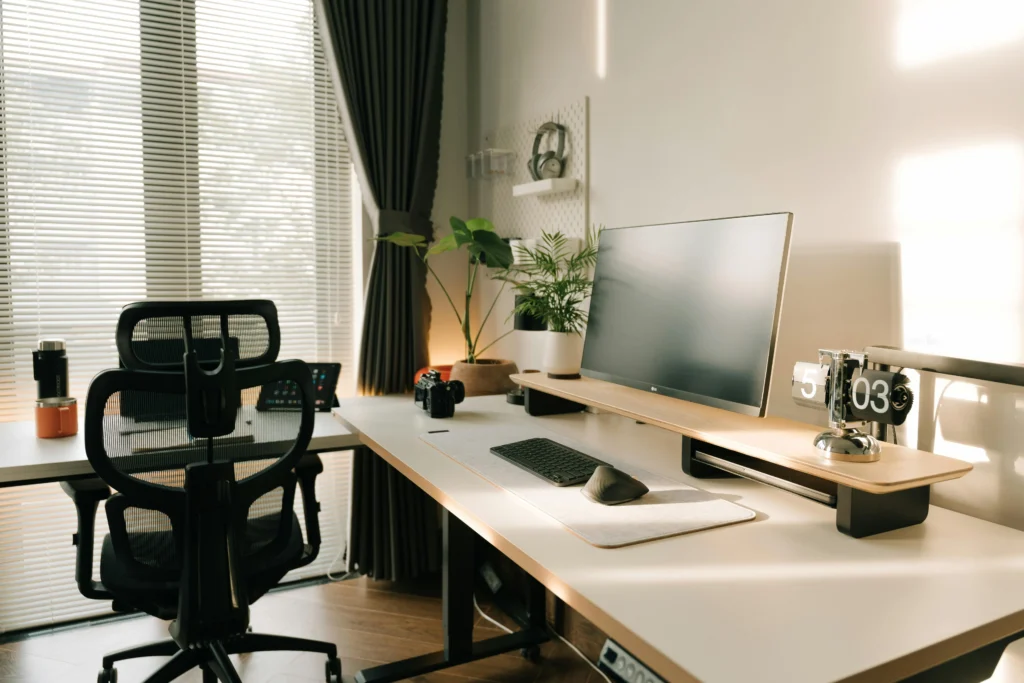
Before you start your desk declutter, set yourself up for success by creating structure and intention. Begin by setting a timer for exactly 60 minutes. A clear time limit keeps the process focused and prevents perfectionism from slowing you down, you’re aiming for progress, not a showroom-perfect desk. Next, gather a few basic supplies so you don’t interrupt your momentum once you begin: a microfiber cloth for wiping surfaces, a trash bag for quick disposal, a small box for items that belong elsewhere, drawer dividers or trays to create order, and labels or sticky notes for easy identification. Having everything within reach keeps your workflow smooth and efficient.
Finally, define your desk’s real purpose before touching anything. Whether it’s for work, studying, creative projects, or daily planning, your setup should support what you actually do there. This clarity makes decisions easier, helping you confidently choose what stays on your desk and what needs to go so your workspace truly works for you.
Step-by-Step Desk Declutter Plan
Step 1: Clear the surface
Begin your desk declutter by removing everything from your desk, every paper, gadget, decor piece, and stray cord. This complete reset prevents you from simply rearranging clutter and instead helps you see what truly deserves space on your work surface. Place items temporarily on the floor or a nearby table so you can evaluate them later with a clear mind. Once the desk is empty, wipe down the entire surface, edges, corners, and even the legs using a damp microfiber cloth. Dust, smudges, and buildup collect quickly and quietly affect how your workspace looks and feels.
Cleaning first creates a fresh foundation, boosts motivation, and prepares your desk for a layout that supports focus, comfort, and productivity long after your one-hour declutter is finished.
Step 2: Sort into categories
As you return items to your desk, sort everything into clear, practical groups such as daily use, occasional use, storage elsewhere, and recycle or discard. This step prevents clutter from creeping back in through random placement and forces each item to earn its spot. Items you use every day should stay within arm’s reach, while tools used less often can move to drawers, shelves, or other storage zones. Be honest about how often you actually use each object, if something hasn’t been touched in months, it probably doesn’t deserve prime desk space. Effective decluttering isn’t about keeping more; it’s about creating room for what truly supports your work, focus, and efficiency.
Step 3: Manage paperwork
Paper clutter builds fast when documents are stacked without intention. Start by sorting everything into to-do, file, and shred so each page has a clear purpose instead of becoming part of a forgotten pile. Important action items should stay visible, while completed or unnecessary papers can be filed or discarded immediately. Whenever possible, digitize key documents by scanning them to reduce physical volume and improve searchability later. To keep papers from spreading across your desk, use vertical file holders so active documents stand upright rather than forming flat stacks that grow out of control. This system keeps paperwork accessible, organized, and easy to maintain long after your declutter session ends.
Step 4: Organize drawers
Drawers collect clutter quickly, so start by emptying each one completely and wiping down the interior to remove dust, crumbs, and residue. This clean slate helps you see what actually deserves space. As you return items, use drawer dividers to create clear sections for pens, clips, chargers, notebooks, and tools so nothing shifts into disorder every time you open the drawer. Be intentional about what goes back in, most desks don’t need duplicates of everything. Keep only what works and what you use regularly, and relocate, donate, or discard extras. When drawers are thoughtfully arranged, they support efficiency instead of hiding chaos.
Step 5: Tame cables and electronics
Cables are one of the fastest ways a desk starts to look messy, so begin by identifying which cords you truly need. Keep only the chargers and adapters you actively use, and remove outdated or duplicate cables that serve no purpose. Next, introduce cord organizers such as cable clips, sleeves, or under-desk trays to guide wires off your work surface and prevent tangling. Managing cords not only improves appearance but also protects them from damage. Finally, elevate your devices with a laptop stand or monitor riser to free up valuable space underneath for keyboards, notebooks, or storage trays. This creates better posture, improves airflow around electronics, and makes your desk feel lighter and more functional.
Step 6: Return items intentionally
When returning items to your desk, start with daily-use essentials. Place your keyboard, mouse, planner, notebook, and phone stand in designated spots so they’re always within easy reach. Keep decor minimal, one or two personal touches, like a framed photo or small plant, can add warmth without overcrowding the surface. Finally, maintain clear zones by separating work tools from personal items, ensuring that each object has a defined home. This approach prevents visual clutter from creeping back and helps your desk stay functional, organized, and visually calming long after your one-hour declutter.
Desk Declutter Storage Solutions That Work
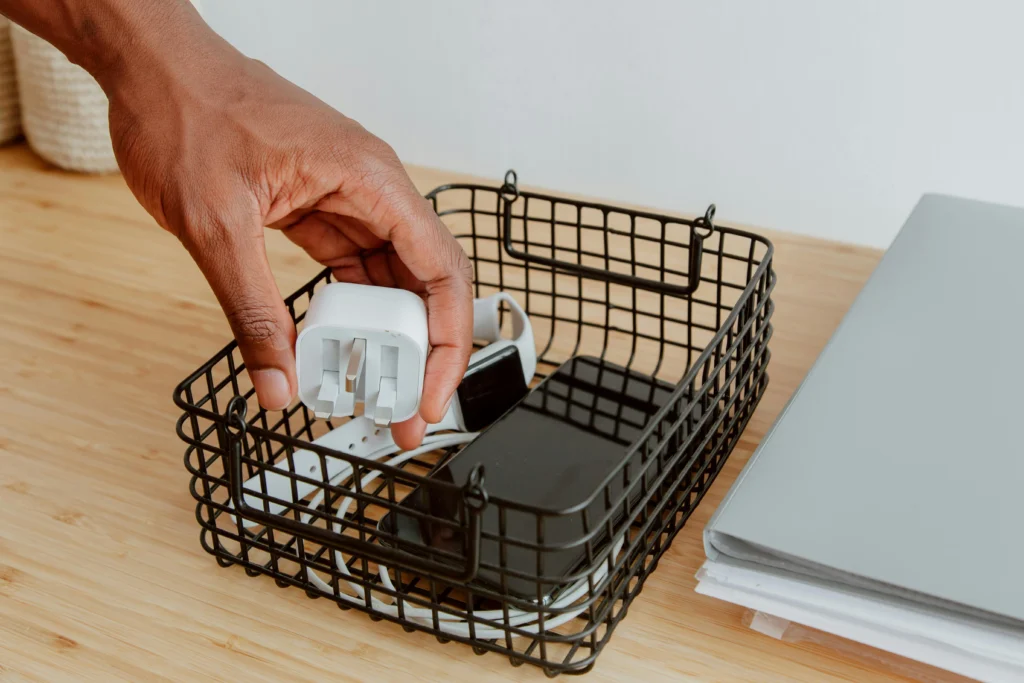
Effective desk declutter organization relies on thoughtful storage that keeps everything in its place without crowding your workspace. Drawer systems, whether built-in or modular inserts, give every small item, from pens and clips to chargers, a dedicated home, reducing clutter and making supplies easy to find. Vertical organizers, such as wall-mounted shelves, pegboards, or risers, maximize space without shrinking your desktop, allowing you to store items up high while keeping your main surface clear. Desktop trays are perfect for papers, notebooks, or current projects, preventing stacks from sprawling across your desk and creating visual chaos.
For a cleaner look, hidden storage like cabinets beneath your desk conceals supplies while keeping them accessible when needed, combining functionality with a minimalist aesthetic. Together, these strategies ensure your workspace remains orderly, efficient, and conducive to focused work.
One-Hour Desk Declutter Schedule
To make the most of a one-hour desk declutter, breaking the process into timed segments helps maintain focus and momentum. Minutes 1–10 are dedicated to clearing everything off your desk and giving surfaces a thorough wipe, removing dust, fingerprints, and grime. Minutes 11–25 focus on sorting items into groups, daily essentials, occasional tools, storage elsewhere, and things to recycle or discard, so you can reduce clutter efficiently. Minutes 26–40 are for organizing drawers and papers, using dividers, vertical file holders, and digital scanning to keep documents and supplies orderly. Minutes 41–55 are reserved for cable management and equipment setup, arranging cords with clips or sleeves and elevating devices with stands or risers.
Finally, minutes 56–60 are for final adjustments: placing daily items in their designated spots, adding minimal decor, and ensuring clear zones for work and personal items. This structured approach keeps your energy steady and ensures your workspace is fully functional by the end of just one hour.
Common Mistakes on Desk Declutter

Even after a thorough desk declutter, certain habits can quickly undo your progress. Keeping items “just in case” often leads to unnecessary clutter; if an object doesn’t support your daily workflow, it belongs in storage elsewhere. Overfilling drawers is another frequent mistake, crowded compartments prevent easy access and make organization unsustainable. Ignoring cable clutter can instantly undermine a tidy surface, as tangled cords create visual chaos even on a clean desk. Finally, skipping maintenance turns a one-time effort into a recurring struggle; regular small resets and mindful placement are essential to keep your workspace orderly and functional long-term.
Desk Declutter for Different Work Styles
Different types of desks benefit from approaches that suit their purpose. Home office desks function as command centers for work and administration, so it helps to store paperwork vertically in file holders or trays, keeping active documents within easy reach while filing older materials in cabinets or drawers. Tech accessories, like chargers, external drives, and headphones, should also have dedicated storage spots to reduce clutter and protect equipment.
Student desks require organization that supports learning and productivity. Separating school supplies by subject or activity, for example, pens and notebooks for math, art supplies for creative projects, prevents mix-ups and helps students find what they need quickly. Clear containers, pencil cups, and labeled folders can make homework and study sessions more efficient and less stressful.
Creative workspaces often contain varied materials, from paints and markers to paper, fabric, or craft tools. Using bins, trays, and labeled containers keeps these items accessible without overwhelming the surface, allowing inspiration to flow while preventing mess. With intentional zones for different mediums, artists, designers, or hobbyists can maintain a tidy environment while staying ready to create.
How St. James Closets Supports Desk Declutter Organization
At St. James Closets, organization starts with understanding how you use your space. A desk declutter functions best when supported by smart, accessible storage. Custom cabinetry, modular drawer systems, shelving, and built-in workstations allow your workspace to operate efficiently, without relying on cluttered surfaces.
Whether your desk is part of a home office, bedroom, or study area, thoughtful design creates dedicated space for supplies, paperwork, and technology while keeping your desktop clear and distraction-free. Tailored solutions not only streamline daily routines but also help maintain long-term productivity.
Discover how custom office and storage solutions from St James Closets can transform your workspace into a functional, organized, and inspiring environment. Visit StJamesClosets.com today to design a desk and storage system that keeps your workspace orderly long after your first declutter session.
You don’t need an entire weekend to transform your workspace. With a focused desk declutter and the right storage systems, you can restore order in just one hour and keep it that way. At St. James Closets, we design custom office and desk storage that fits how you actually work. Contact us today and turn your desk into a space that supports focus, efficiency, and comfort every single day.