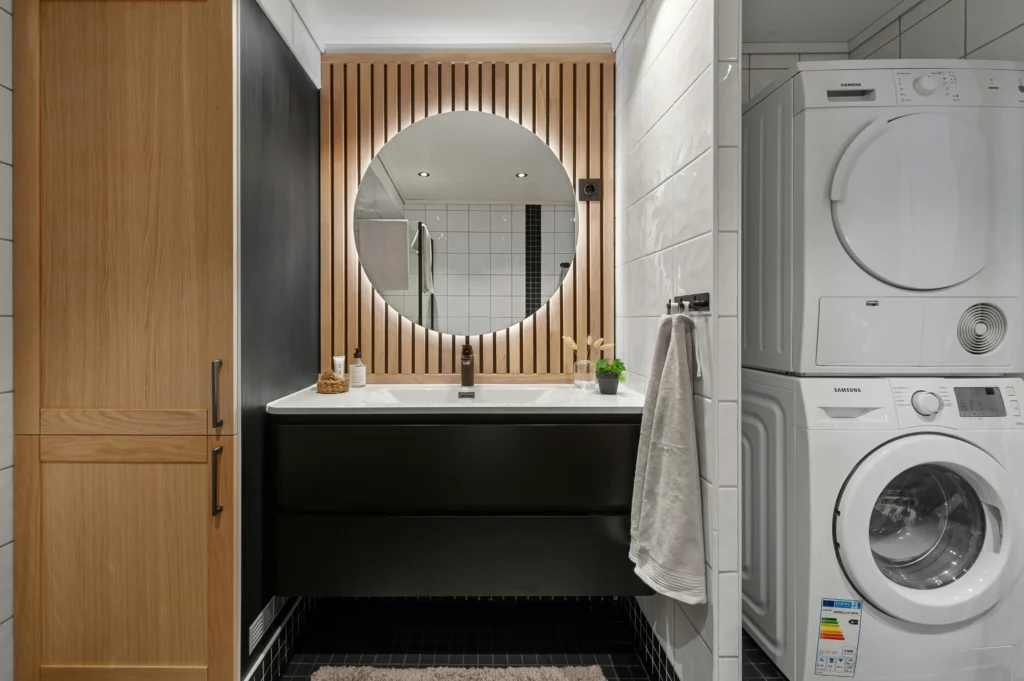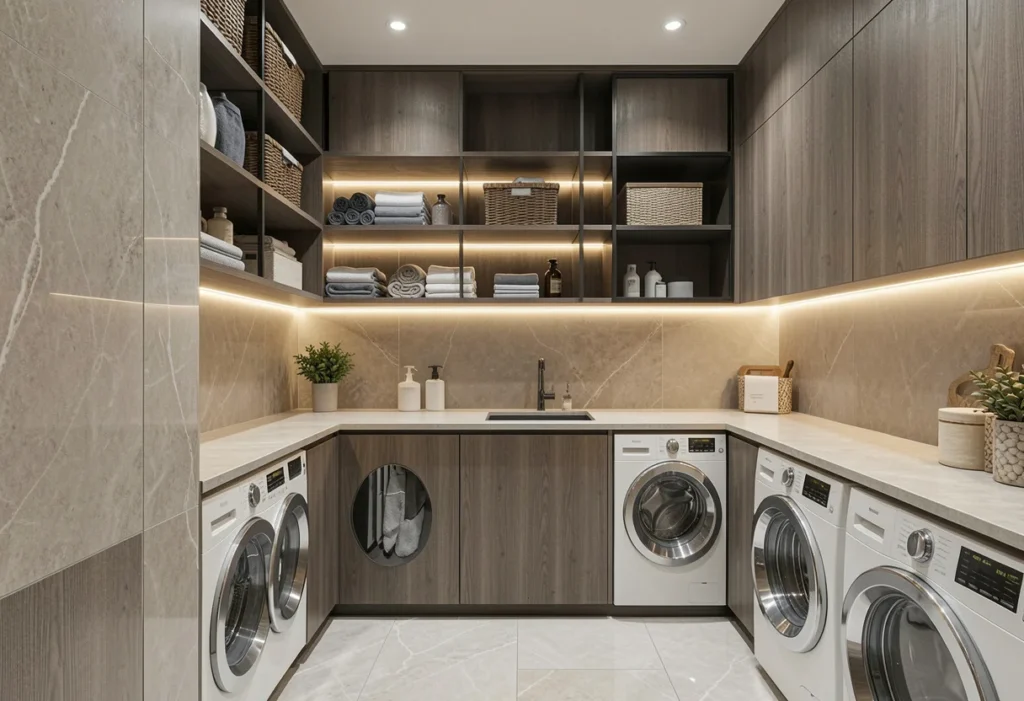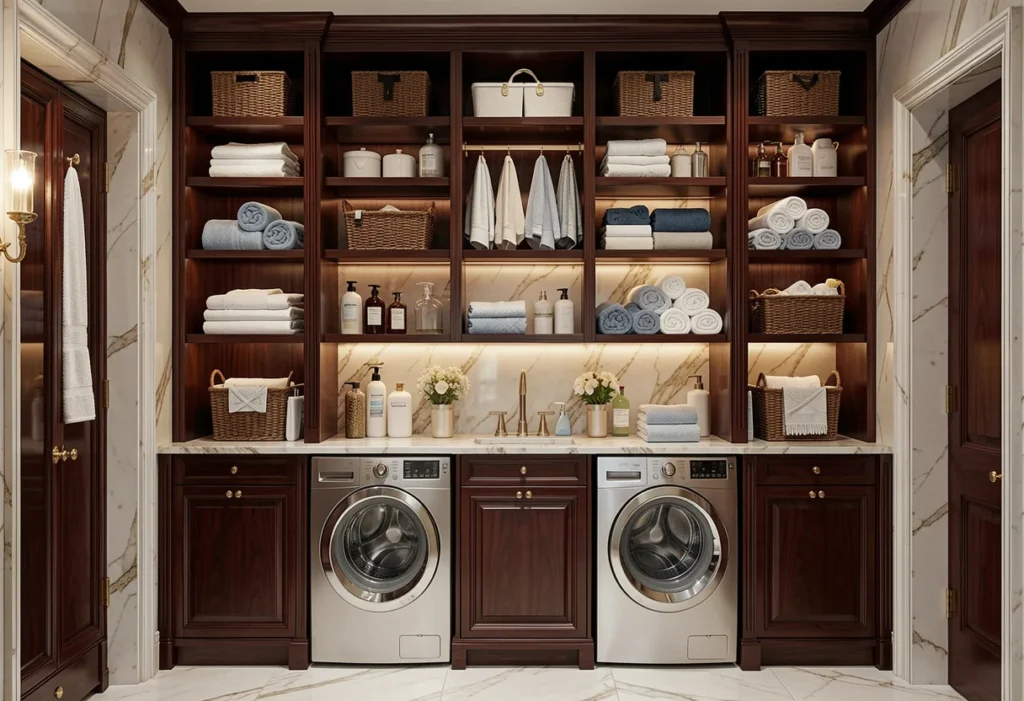
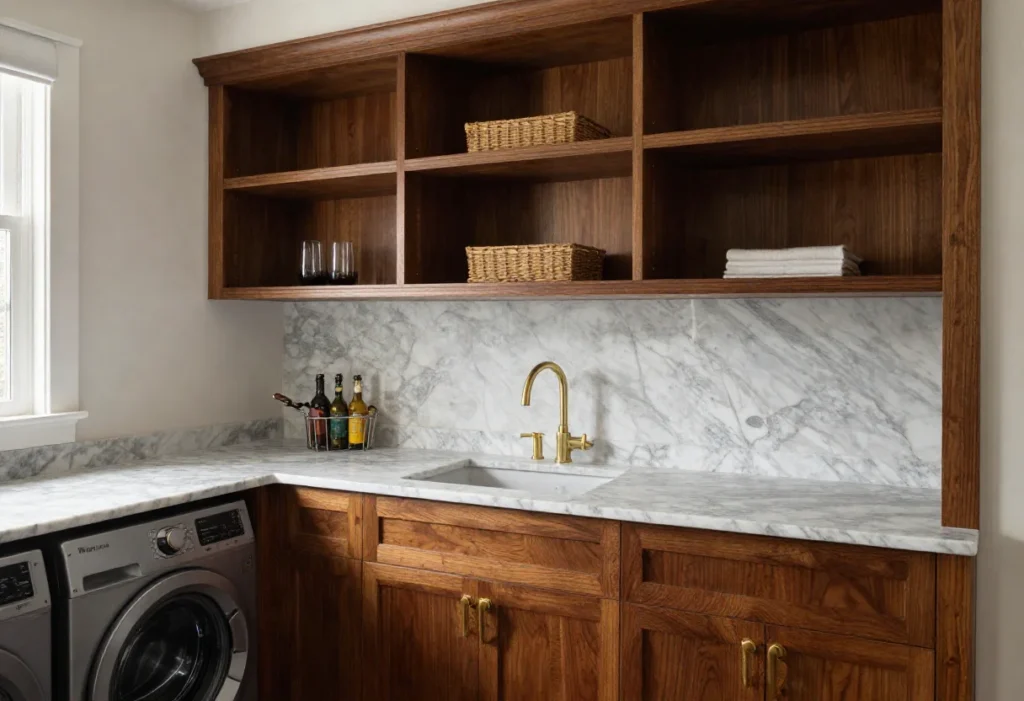
A well-planned laundry room improves how a household manages daily chores. Busy homes rely on efficiency. Poor layouts create delays and clutter. A structured space improves movement and organization. The room becomes easier to use and maintain. A functional laundry room supports clear routines. Sorting, washing, drying, and folding each have dedicated areas. Storage reduces mess and keeps supplies accessible. Counter space improves workflow. Vertical storage increases capacity without crowding the room.
At St. James Closets, laundry room design focuses on precision and usability. Each system is customized to fit the space. Layouts prioritize efficiency and accessibility. The result is a clean, organized, and highly functional utility area that supports everyday living.
Why Laundry Room Design Matters in Busy Homes
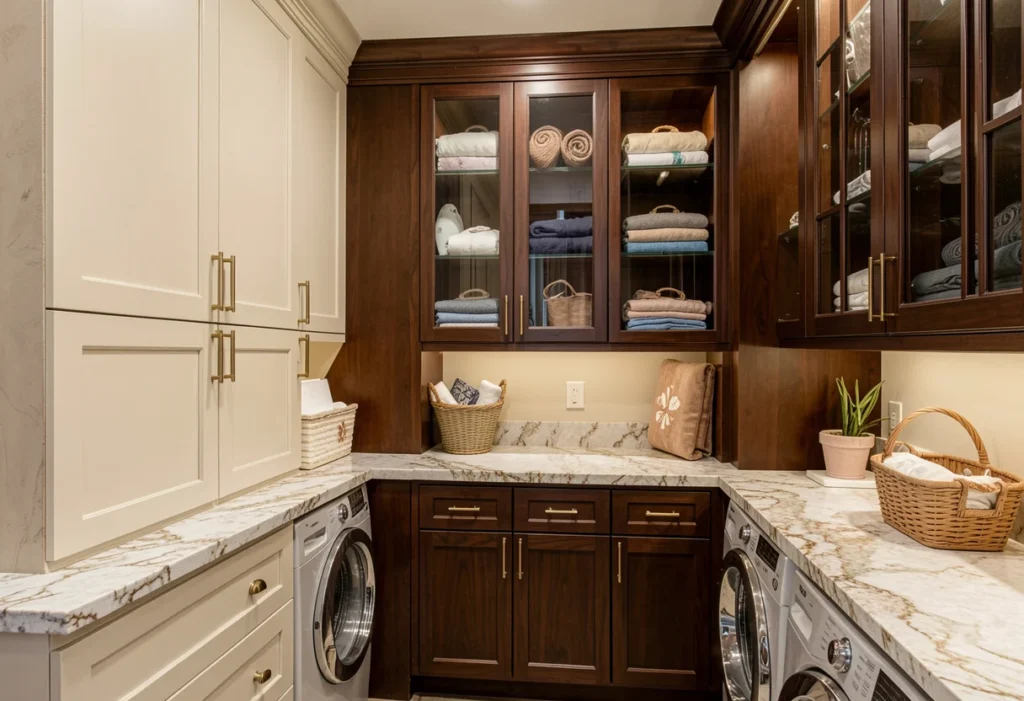
In busy households, time is a limited resource and efficiency becomes essential. A poorly designed laundry room slows down daily routines, adds unnecessary steps, and creates frustration. A well-planned layout improves flow, reduces effort, and supports smoother movement throughout each task. Supplies are placed in accessible locations, and clear zones are created for sorting, washing, drying, and folding. This structure reduces confusion, minimizes repetition, and makes everyday chores more manageable and consistent.
Many homes treat the laundry room as a secondary space, which often leads to cluttered counters, scattered supplies, and limited storage. With intentional design, this area can become a highly functional zone where every inch serves a purpose. Storage is integrated into the layout, vertical space is fully utilized, and work surfaces remain clear and practical. At St. James Closets, laundry room systems are designed with precision to maximize space, improve workflow, and create an organized environment that supports everyday living.
Common Challenges in a Laundry Room
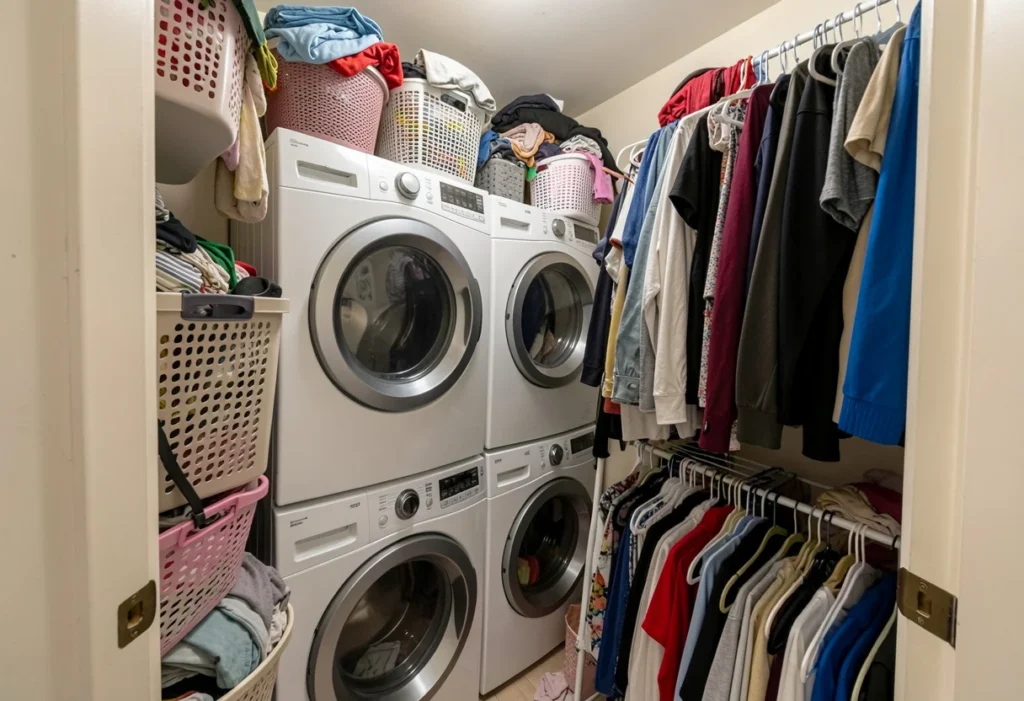
Laundry rooms often face recurring design and organization challenges that affect daily efficiency. Limited space, poor layouts, and lack of proper storage can quickly lead to clutter and frustration. Without a clear system in place, even simple routines become time-consuming. Understanding these common issues is the first step toward creating a more functional and organized laundry space.
Limited Storage Capacity
One of the most common issues in a laundry room is limited storage capacity. Without proper cabinetry or shelving, essential supplies often end up scattered across countertops, floors, or inside random containers. This lack of structure creates visual clutter and makes everyday tasks harder to manage. It also slows down routines because items are not stored in consistent, easy-to-find locations.
A well-designed laundry room solves this through intentional storage planning. Built-in cabinets create enclosed space for detergents, fabric softeners, and cleaning supplies, keeping them organized and out of sight. Overhead shelving adds extra capacity for items that are not used daily, such as seasonal products or backup supplies. Pull-out storage improves accessibility by grouping items for sorting and organization in a structured way. These solutions work together to ensure every item has a clear and designated place, improving both efficiency and cleanliness.
Poor Workflow Layout
Another major challenge is an inefficient workflow layout. When appliances, storage areas, and folding stations are placed without planning, daily tasks become disconnected and repetitive. This leads to unnecessary movement, wasted time, and a less functional space overall.
A well-structured laundry room follows a natural sequence that mirrors how tasks are completed. Sorting areas are positioned near hampers or entry points. Washing and drying zones are placed close together for smooth transfer. Folding areas are positioned nearby to reduce back-and-forth movement. Storage is integrated at the final stage of the process to complete the cycle. This logical flow reduces backtracking and improves overall efficiency, making the space easier and faster to use every day.
Clutter and Overcrowding
Without proper structure, a laundry room can quickly become overcrowded and difficult to maintain. Supplies accumulate on surfaces, baskets pile up, and clothing is left in temporary stacks. Over time, this creates a space that feels disorganized and stressful to use.
Custom storage systems help prevent this by creating dedicated zones for each task. Sorting, washing, folding, and storage areas are clearly defined, which keeps activities separated and organized. Clear surfaces reduce visual clutter and improve usability. Unnecessary items are minimized, ensuring that only essential tools and supplies remain in the space. The result is a cleaner, more functional laundry room that is easier to manage and maintain over time.
Essential Elements of a Functional Laundry Room
Smart Storage Solutions
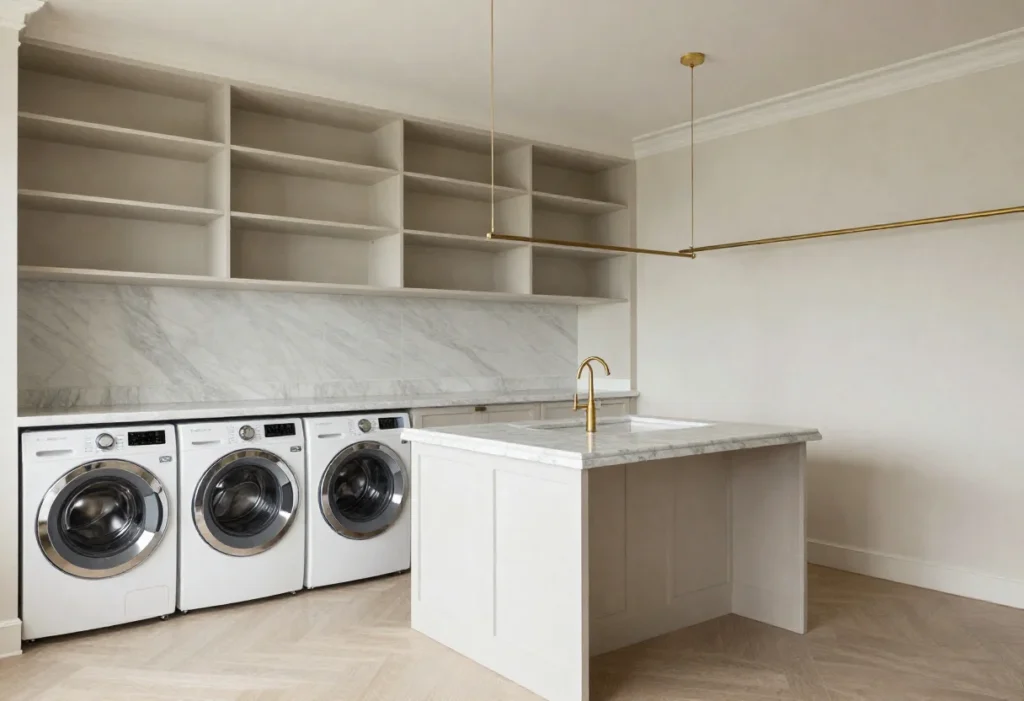
Effective storage is the foundation of a well-designed laundry room. Custom cabinetry and shelving help maintain order and improve accessibility. A structured system keeps essential items in designated areas, reducing clutter and improving workflow efficiency.
Key storage features in a well-designed laundry room focus on maximizing organization and efficiency. Tall cabinets for vertical storage make use of full wall height to increase capacity, allowing bulk items, cleaning supplies, and seasonal products to be stored without taking up floor space. This improves organization and keeps frequently used areas clear and easy to access. Pull-out hampers for sorting clothes simplify the laundry process by separating lights, darks, and delicates at the source, reducing visible clutter and making transport between washing areas more efficient while maintaining a clean and streamlined look.
Drawer systems for smaller items provide dedicated storage for essentials such as detergents, dryer sheets, and stain removers, with internal dividers that prevent items from shifting or mixing, improving accessibility and keeping all surfaces neat and uncluttered.
At St. James Closets, storage systems are designed based on household needs, ensuring long-term usability and efficient space planning.
Countertop and Folding Space
A dedicated folding area is essential in any functional laundry room. Without it, clean clothes are often placed on machines or other uneven surfaces, leading to disorganization and inefficiency.
A properly designed countertop provides a clean workspace for folding, supported by a flat and durable surface that allows clothes to be arranged neatly immediately after drying. This reduces handling time and keeps garments organized throughout the process, making laundry tasks more efficient and consistent. It also improves organization during laundry cycles by creating a dedicated folding area that structures the workflow, allowing items to move smoothly from washing to drying to folding without unnecessary interruption or confusion. At the same time, it helps reduce clutter buildup by providing a defined space for finished laundry, preventing clean clothes from piling up on appliances or other surfaces and maintaining a more tidy, functional, and visually organized laundry room.
Integrated Hanging Areas
Hanging space is often overlooked in laundry room design, yet it plays a key role in garment care and organization. Built-in rods or retractable systems provide a practical solution for air-drying or temporary storage. Integrated hanging areas help reduce wrinkles by allowing garments to dry in a straight position. This minimizes the need for ironing and preserves fabric quality. They also create a convenient space for organizing freshly laundered clothes before they are stored away.
Designing a Laundry Room for Maximum Efficiency
A successful laundry room design is built around workflow, ensuring that every element supports the natural sequence of daily tasks. The placement of appliances and storage should follow a logical movement from washing to drying to folding, reducing unnecessary steps and improving efficiency. An effective layout positions the washer and dryer side by side or stacked for easy access, keeps storage within arm’s reach for convenience, and places a central folding area to streamline transitions between tasks. This structured approach helps improve overall functionality and creates a smoother, more organized experience.
Vertical space optimization further enhances efficiency by making use of often-overlooked wall height. Wall-mounted cabinets, tall shelving units, and hanging systems above appliances increase storage capacity without taking up valuable floor space. This keeps the laundry room open, organized, and easier to move within, while also improving accessibility to frequently used items.
Modern laundry rooms also benefit from multi-functional design elements that maximize usability within a limited footprint. Cabinets that double as sorting stations, fold-out ironing boards, and combined storage and folding surfaces reduce the need for extra furniture while maintaining a clean and streamlined layout. These integrated solutions support multiple tasks within a single space, improving both efficiency and long-term practicality.
The Role of Custom Design in a Laundry Room
Tailored to Household Needs
Every household uses its laundry room in a different way, which makes customization essential for long-term efficiency. Custom design ensures that the space reflects specific habits, routines, and storage requirements instead of relying on a one-size-fits-all layout.
Every household has different laundry room needs, which is why customization is essential for creating an efficient and functional space. Families often manage larger laundry volumes, requiring structured sorting systems with separate hampers for different fabric types or family members to keep loads organized and reduce confusion during washing cycles. Households with professional or work-related clothing may prioritize garment care and organization through dedicated hanging systems, wrinkle-prevention areas, and organized storage for delicate fabrics that help maintain clothing quality while supporting efficiency. Smaller households or compact spaces benefit from streamlined layouts that maximize every inch through compact cabinetry, vertical storage, and multi-use surfaces, allowing the room to remain functional and organized without feeling overcrowded.
At St. James Closets, each laundry room is designed around how the household actually lives, ensuring practical and personalized solutions.
Seamless Integration with Home Design
A laundry room should feel like a natural extension of the home rather than a separate utility space. Custom cabinetry, coordinated finishes, and carefully selected materials help create visual continuity across interiors. This alignment improves both aesthetics and functionality.
When design elements match the home’s overall style, the laundry room feels more intentional and refined. Consistent colors, textures, and hardware create a unified look that blends with adjacent spaces. This integration also improves usability by making the space more inviting and easier to maintain.
Durable Materials for Daily Use
A laundry room is one of the most frequently used areas in a home, which makes durability a key design requirement. High-quality materials ensure that cabinetry, shelving, and storage systems withstand constant use, moisture, and weight over time. Strong construction prevents wear, warping, and surface damage, maintaining both appearance and performance. Reliable hardware and finishes also contribute to long-term stability. At St. James Closets, craftsmanship and durability are prioritized in every project, ensuring that each system remains functional and visually consistent for years of daily use.
How a Well-Designed Laundry Room Improves Daily Life
A structured laundry room supports faster and more efficient routines by reducing the time spent on everyday household chores. When everything has a designated place, tasks become more straightforward, organized, and easier to complete without unnecessary steps or confusion. It also helps reduce household stress, since clutter and disorganization often create visual and mental overload. A clean, well-organized space brings a sense of order that makes daily routines feel more manageable and less overwhelming. At the same time, a thoughtful design improves the overall use of home space, allowing even small laundry rooms to become highly functional through efficient layouts and custom storage solutions that ensure every inch is used effectively without waste.
Common Design Mistakes to Avoid in a Laundry Room
Ignoring Storage Needs
One of the most common mistakes in laundry room design is underestimating how much storage is actually required. Without adequate cabinetry, shelving, or built-in systems, everyday essentials quickly accumulate on countertops and floors, creating constant clutter and disorganization. This lack of structure makes it harder to maintain a clean and functional space over time. Proper planning ensures that detergents, cleaning supplies, hampers, and accessories all have dedicated storage, helping the room stay organized, efficient, and easy to use.
Poor Lighting Choices
A dim laundry room can significantly impact both efficiency and comfort. Poor lighting makes it harder to sort clothes, identify stains, and complete detailed tasks accurately. It can also make the space feel smaller and less inviting, reducing overall usability. Proper lighting is essential for visibility and workflow efficiency. A combination of overhead lighting, task lighting, and well-placed fixtures ensures that every area of the room is well-lit and functional throughout all stages of the laundry process.
Overlooking Workflow
A disorganized layout can disrupt the entire laundry process and make routine tasks feel inefficient. When appliances, storage, and folding areas are placed without considering daily movement, it creates unnecessary steps and breaks in workflow. Planning the space around how laundry is actually done is essential for functionality. A well-structured layout supports a clear sequence from sorting to washing, drying, and folding, allowing the space to operate smoothly and reducing time spent on repetitive or unproductive movement.
Why Professional Laundry Room Design Matters
Expert space planning ensures that even the smallest laundry room is used efficiently. Professionals understand how to design layouts that improve movement, accessibility, and storage capacity without wasting space. Their approach focuses on practical organization, ensuring that every element serves a clear purpose and supports daily tasks. Customization for long-term use further enhances functionality by allowing storage systems and layouts to adapt over time. Adjustable shelving, flexible cabinetry, and scalable designs ensure the space continues to meet changing household needs. At the same time, a professionally designed laundry room adds enhanced home value by improving both function and appeal.
A well-organized and thoughtfully planned space not only supports everyday living but also contributes to the overall desirability and market value of the home.
In Conclusion
A well-designed laundry room is more than a utility space, it plays an important role in creating an efficient and organized home. Thoughtful planning improves how the space functions on a daily basis. Custom storage systems reduce clutter and improve accessibility. Smart layout design supports smoother movement between tasks such as sorting, washing, drying, and folding. These combined elements help streamline household routines and reduce unnecessary effort and stress.
With a focus on functionality and tailored design, even a small or basic laundry room can be transformed into a highly efficient and practical environment. Proper use of space, clear organization, and purpose-driven layouts ensure that every area serves a function. The result is a space that supports daily living, improves productivity, and maintains long-term order and usability.
Ready transform your laundry room into a space that truly supports your daily routine and lifestyle? Custom design improves efficiency, organization, and overall flow within the home. A well-planned layout reduces clutter, streamlines tasks, and makes everyday chores more manageable. Thoughtful storage solutions ensure that every item has a proper place, creating a cleaner and more structured environment.
With expert craftsmanship and tailored solutions, your laundry space can be designed for both function and long-term usability. Every detail is planned to enhance convenience and maximize available space. Start building a more practical and organized laundry room today and experience how intentional design can improve the way your home works every day.