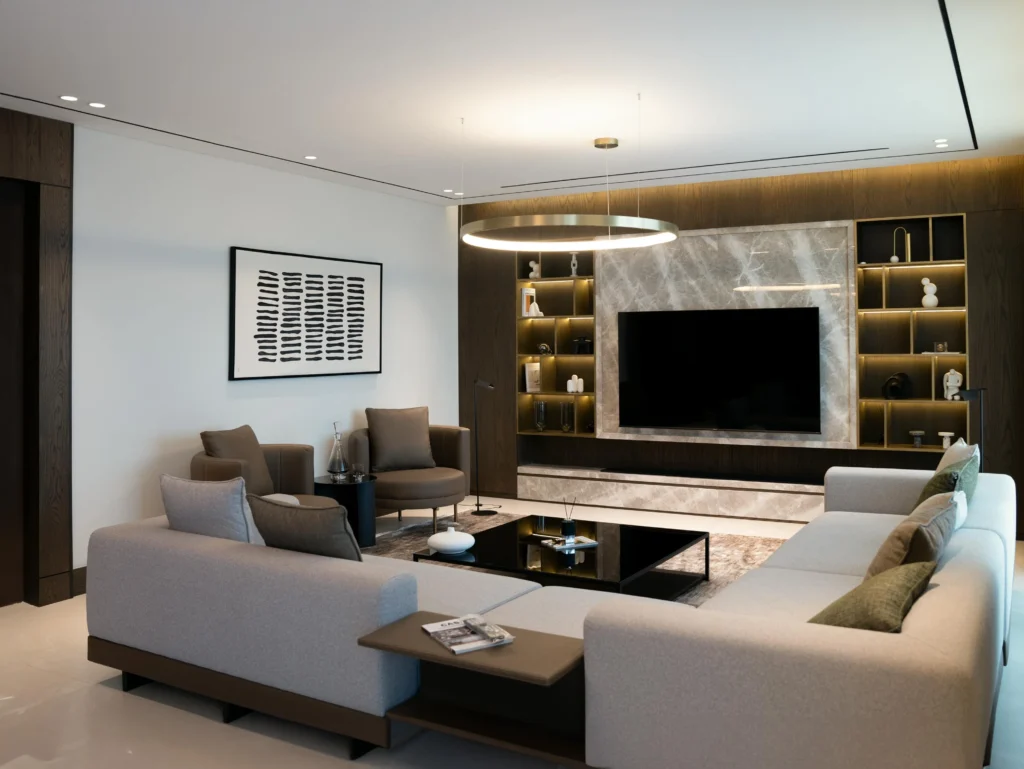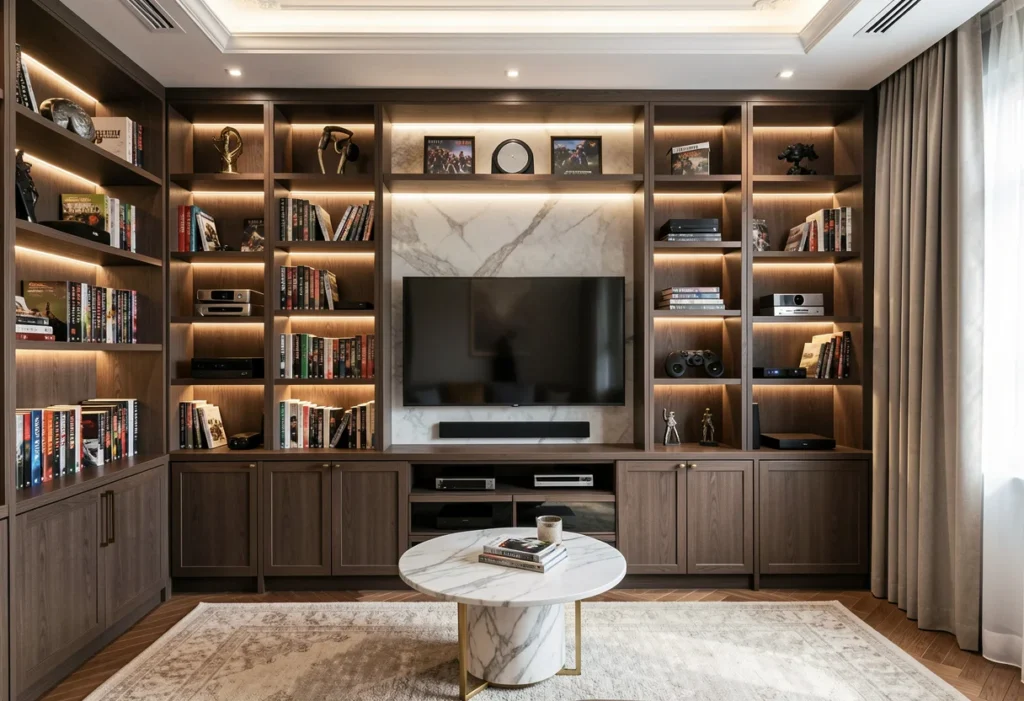
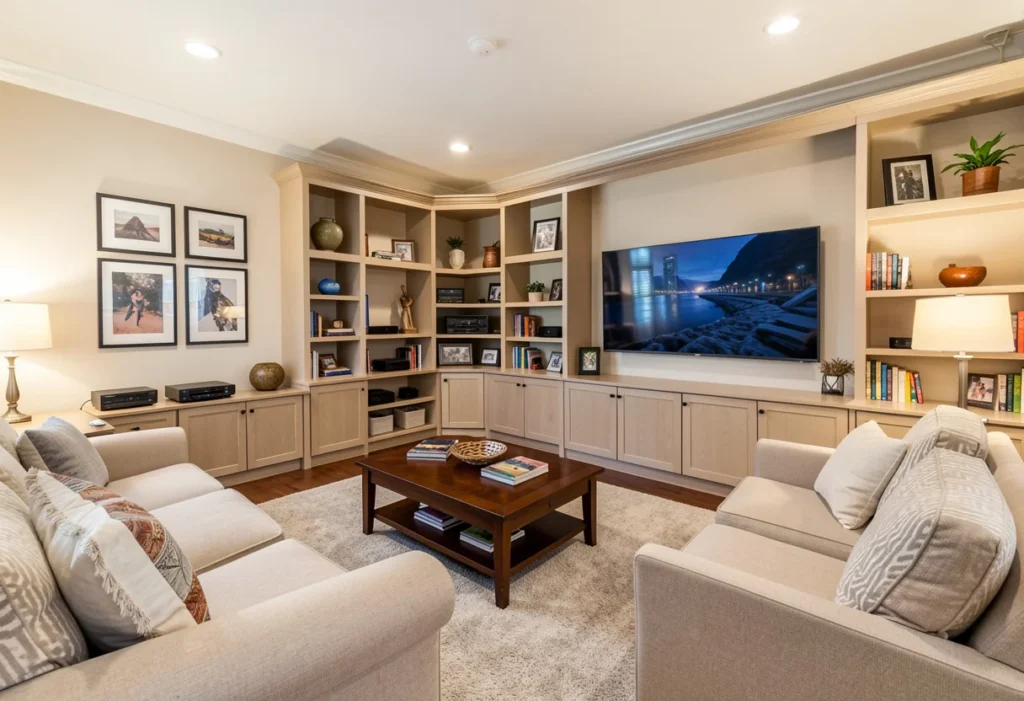
A well-planned media center has the power to transform a living room from a cluttered tangle of electronics into a cohesive, inviting entertainment space. Televisions, gaming consoles, speakers, streaming devices, and their accompanying cords, remotes, and accessories all compete for attention, and without a thoughtful layout, the room can quickly feel chaotic and overwhelming. Effective media center design not only organizes these elements but also enhances the overall flow of the space, making it easier to relax, host guests, and enjoy daily activities in a comfortable, visually appealing environment.
At St. James Closets, media center design combines style with practicality. Custom solutions integrate adjustable shelving, closed cabinetry, open display areas, and cable management systems to create a streamlined, functional focal point. Every element is designed to accommodate modern electronics while maintaining balance, ensuring the space feels intentional rather than cluttered. Built-in lighting, well-chosen finishes, and proportionate cabinetry further elevate the room’s aesthetic, making the media center a natural centerpiece that complements the surrounding décor.
This blog delves into the key principles of effective media center design, offering insights into storage optimization, cable management, ventilation, and layout strategies. By applying these solutions, homeowners can enhance comfort, improve accessibility, and maintain an organized, visually pleasing living area that seamlessly integrates technology into daily life.
Why Media Center Design Matters
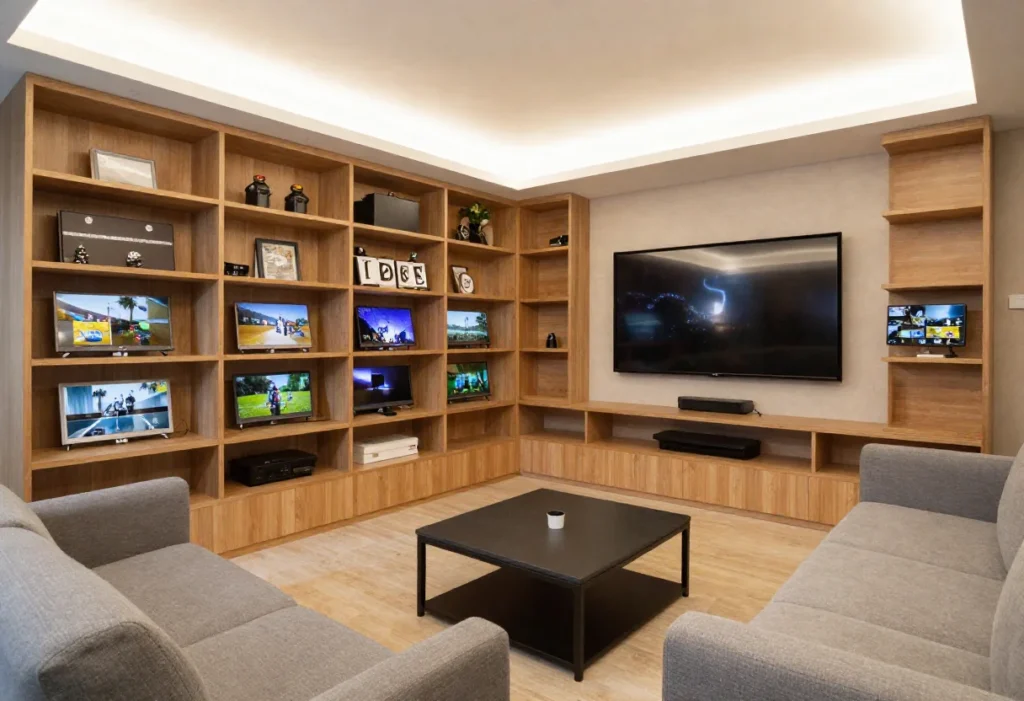
Electronics bring both entertainment and convenience, but they also introduce the risk of clutter, with consoles, speakers, remote controls, streaming devices, and tangled wires quickly accumulating in one area. A well-designed media center provides structure by giving each component a designated place, keeping surfaces clear and the room visually balanced. When devices are neatly arranged within cabinets, shelves, or drawers, the living space immediately feels more intentional, polished, and organized.
Beyond aesthetics, thoughtful media center design also improves room flow. Proper placement ensures that furniture and storage work harmoniously with walkways and seating areas, allowing people to move comfortably through the space without obstruction or overcrowding. Additionally, a quality media center offers protection for valuable electronics. Cabinets and shelving shield devices from dust, accidental bumps, and daily wear, while ventilated compartments allow equipment to operate safely without overheating.
In this way, a carefully planned media center combines functionality, safety, and visual appeal, enhancing both the technology and the overall experience of the living room.
Planning a Media Center Layout
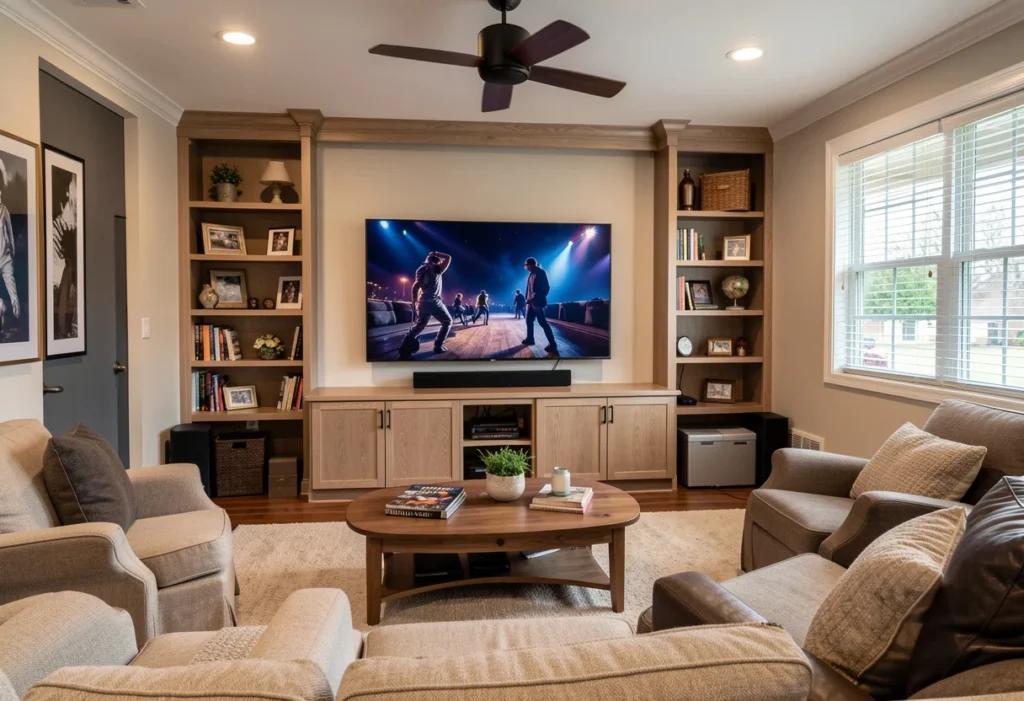
When designing a media center, the first step is to identify the room’s focal point, which in most living rooms is the television. The media center should complement this anchor rather than dominate the space, creating a visually balanced and harmonious environment. Centering cabinetry around the TV establishes symmetry, while additional shelves or cabinets can frame the display naturally, providing storage and aesthetic appeal.
Equally important are viewing angles, which affect comfort and overall enjoyment. Placing the television at eye level helps prevent neck strain and enhances long-term viewing comfort, while maintaining an appropriate distance between the screen and seating ensures optimal image clarity and immersion. Lighting must also be considered: positioning the screen away from large windows or incorporating controlled lighting reduces glare, allowing clear visibility during both day and night.
By thoughtfully addressing focal points, viewing height, seating distance, and lighting, a media center can create an enjoyable and visually appealing entertainment experience.
Essential Storage Features for a Media Center
Open shelving in a media center strikes a balance between accessibility and style, offering homeowners a practical way to keep frequently used electronics within easy reach. Devices such as gaming consoles, streaming boxes, and speakers remain readily available, and open shelves ensure that remote signals can reach equipment without obstruction. Beyond electronics, these shelves provide an opportunity to incorporate decorative elements—books, framed photos, plants, or artwork—allowing the media center to reflect personal taste while maintaining functionality. Thoughtful placement and organization on open shelving can elevate the visual appeal of the space, turning a utilitarian area into a curated display that complements the room’s décor.
Complementing open shelving, closed cabinets provide essential hidden storage that keeps the media center clutter-free. DVDs, Blu-rays, video games, and other media collections can be neatly concealed behind doors, while remotes, controllers, cables, and headphones remain easily accessible yet out of sight. Cabinets also serve as flexible storage for household items such as board games, blankets, or spare electronics, making the media center a multi-functional hub. This combination of open and closed storage allows the space to support modern entertainment needs while preserving a clean, cohesive look. By blending accessibility, organization, and visual balance, a well-designed media center enhances both the functionality and aesthetic of any living room.
Managing Cables and Electronics
Built-In Cable Management is an essential feature in any thoughtfully designed media center, addressing one of the most common and frustrating issues in modern living spaces: tangled, visible, and unsightly wires. By incorporating integrated cable channels, hidden conduits, or recessed pathways, cords can be routed discreetly behind cabinetry, keeping them completely out of sight while remaining fully functional. This approach not only preserves a clean, organized aesthetic, but it also protects cables from accidental damage, reduces wear and tear, and minimizes tripping hazards, anw important safety consideration, especially in family living areas. A media center with effective cable management elevates the entire room, making technology feel seamless rather than intrusive.
Ventilation for Equipment plays a crucial role in maintaining the longevity and performance of electronics such as gaming consoles, receivers, sound systems, and streaming devices. Heat buildup can degrade sensitive components over time, so ventilated shelves, slotted panels, or perforated cabinet doors are designed to allow air to circulate freely around each device. This ensures that equipment stays cool during extended use, preventing overheating and potential malfunctions. Proper airflow not only protects valuable electronics but also promotes optimal performance, giving homeowners confidence that their entertainment systems are safe and reliable.
Accessible Power Sources further enhance the functionality of a custom media center by simplifying connectivity for multiple devices. Strategically placed outlets, built-in power strips, or recessed plug locations allow TVs, speakers, consoles, and streaming equipment to be connected without messy, exposed cords. This thoughtful design improves organization and usability while supporting upgrades or device rearrangements in the future. With power sources integrated into the cabinetry, homeowners can easily expand or modify their entertainment setup without compromising aesthetics or convenience, ensuring that the media center remains adaptable, efficient, and visually appealing for years to come.
Integrating Style Into Media Center Design
A well-designed media center should seamlessly integrate with the overall home design, making it feel like a natural extension of the space rather than an added piece of furniture. Custom cabinetry allows homeowners to select finishes, hardware, and colors that complement existing decor, whether modern, traditional, or transitional, ensuring the unit enhances the room’s aesthetic rather than competing with it. Balanced proportions are equally important: oversized cabinets can dominate the space and make it feel cramped, while units that are too small may appear incomplete or out of place. By tailoring dimensions to the wall and surrounding furniture, a custom media center achieves a polished, harmonious appearance.
Beyond functionality, the media center can also serve as a decorative showcase, with shelves or compartments designed to display books, plants, art, or family photos. These elements soften the technology-focused nature of the space, adding warmth, personality, and visual interest while keeping electronics neatly organized and accessible.
Custom Media Centers from St. James Closets
At St. James Closets, custom media center designs are crafted with real-life living in mind, focusing on how homeowners interact with their entertainment spaces. Each unit is tailored to the room’s dimensions, the specific electronics it will house, and the homeowner’s aesthetic preferences, ensuring both style and function are optimized. Features often include adjustable shelving that accommodates devices and decorative items, integrated cable management systems to conceal cords, and hidden storage cabinets for DVDs, remotes, and other accessories.
Thoughtful lighting highlights display areas, while durable materials are chosen to match and enhance the home’s overall design. By combining practical organization with high-quality craftsmanship, these custom media centers transform living areas into polished, efficient, and visually appealing focal points for both entertainment and everyday life.
The Long-Term Benefits of Smart Media Center Design
A thoughtfully designed media center enhances both function and aesthetics, improving daily relaxation, entertainment, and family gatherings. By reducing visual clutter, it keeps consoles, remotes, and accessories neatly organized and easy to access. Thoughtful placement and storage improve room flow, ensuring seating and walkways remain comfortable while safeguarding valuable electronics from dust or accidental damage. A cohesive design integrates the media center seamlessly into the home, complementing existing décor and creating a polished focal point. With the right layout, cabinetry, and shelving features, the media center becomes a functional, attractive, and integral part of the living space rather than a source of clutter.
In Conclusion
A carefully planned media center seamlessly blends organization, functionality, and style to support today’s modern entertainment systems. By incorporating smart storage solutions, hidden cable management, and proportionate design, homeowners can create spaces that are not only visually appealing but also practical for daily use. Custom media centers from St. James Closets add both structure and elegance, allowing technology to complement the room rather than dominate it, while providing easy access to electronics, accessories, and décor. This thoughtful integration transforms the living area into a polished, comfortable, and inviting space for entertainment and family gatherings alike.
Your living room deserves more than a tangle of cords and crowded shelves. Let St. James Closets design a custom media center that organizes your technology while complementing your home’s style. With tailored storage and thoughtful craftsmanship, your entertainment space can become the centerpiece of comfort and connection. Contact us today to start designing a media center that fits your lifestyle perfectly.