A mudroom serves a very different purpose from an entryway, even though both welcome you into the home and collect everyday belongings. While an entryway focuses on first impressions, aesthetics, and greeting guests, a mudroom is designed for function, managing mess, corralling gear, and acting as a hardworking transition zone between outdoors and indoors. Understanding how each space works, and what type of storage best suits your household can dramatically reduce clutter, improve traffic flow, and simplify daily routines. The right approach isn’t about copying trendy designs you see online; it’s about creating a space that supports the way your family actually lives, moves, and uses the home day after day.
In this blog, we break down the key differences between mudroom and entryway storage, explain which option fits different lifestyles, and share practical layout and design recommendations for each. Whether you’re dealing with kids, pets, sports equipment, or simply everyday shoes and coats, you’ll discover how to create a welcoming, organized space that works beautifully for your home.
Mudroom vs Entryway: What’s the Real Difference?
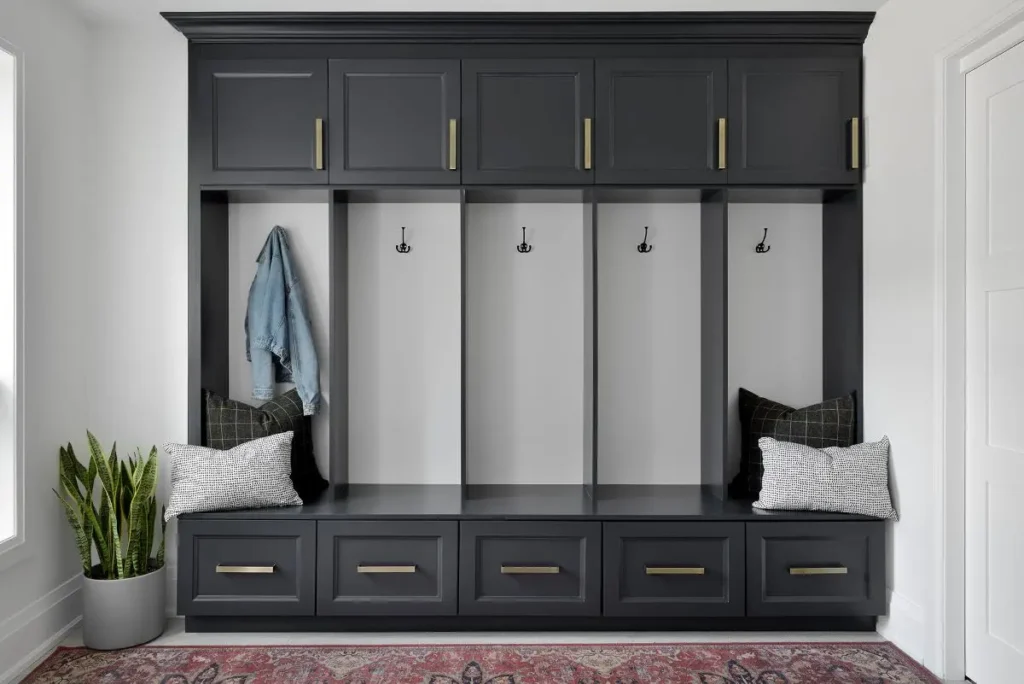
Although they are often discussed together, these two spaces are not the same, and understanding the difference helps you design each one more intentionally.
What is a mudroom?
A mudroom is a true transitional zone, usually located near the entrance your family uses most often the garage, side door, or back door. Its primary purpose is function. This is the space designed to catch daily mess before it spreads through the rest of the home: muddy shoes, wet coats, backpacks, pet leashes, umbrellas, and sports gear all land here first. In a well-planned mudroom, there’s room to sit and take off boots, wipe paws, sort belongings, and store bulky or messy items out of sight. Because it acts as a buffer between the outdoors and the main living areas, the mudroom plays a major role in keeping your home cleaner, more organized, and far less chaotic.
What is an entryway?
An entryway, on the other hand, is the area that greets visitors and creates the first impression of your home. Typically located at the front door, this space focuses more on style and hospitality than heavy-duty storage. While it may provide light organization for keys, mail, and a few coats or shoes, its main job is to feel open, welcoming, and visually appealing. The entryway sets the tone, reflecting your décor style, offering a glimpse of the home’s personality, and establishing a sense of arrival. Instead of holding muddy boots and sports bags, it’s usually designed with statement lighting, mirrors, artwork, or a console table to create a polished look.
Together, mudrooms and entryways serve complementary, but distinct, purposes: one is built to work hard, and the other is meant to welcome gracefully.
Core Purpose: Function vs First Impressions
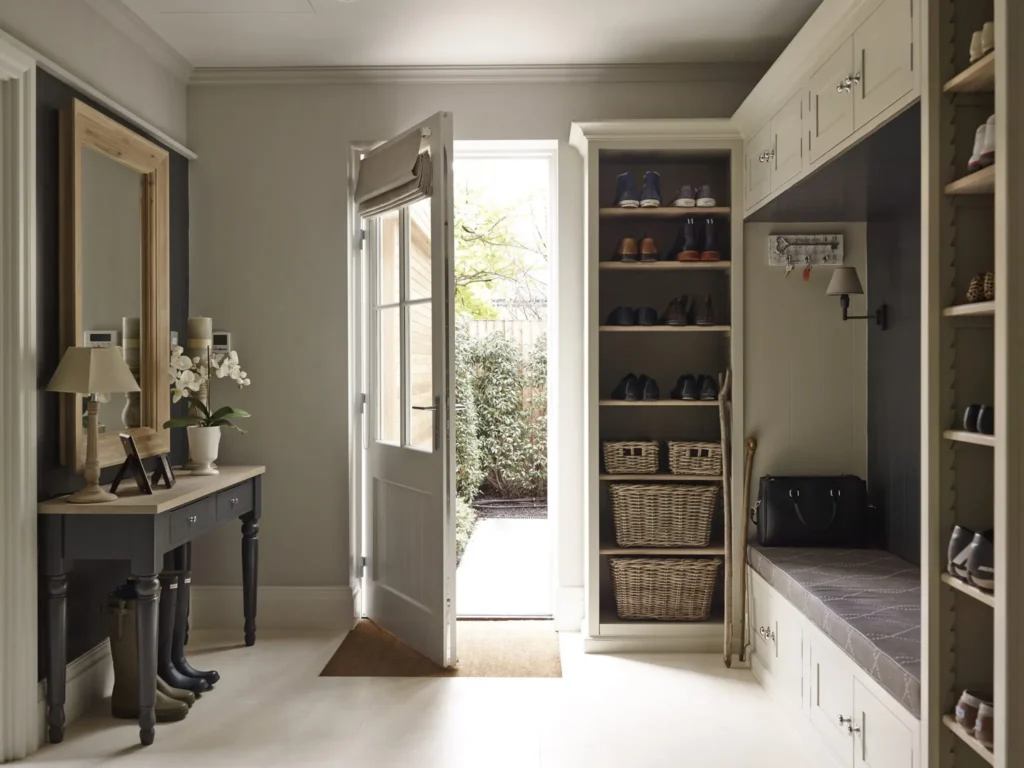
The biggest difference between a mudroom and an entryway lies in what each space prioritizes. A mudroom is designed first and foremost for function. It’s built to handle real life in motion—muddy shoes, dripping umbrellas, school backpacks, pet gear, and bulky outerwear. Durability and practicality drive every design decision, from heavy-use flooring and wipeable surfaces to sturdy hooks, benches, and compartmentalized storage. It’s a hardworking zone meant to catch mess, manage belongings, and keep the rest of the home cleaner and more organized.
The entryway, by contrast, prioritizes presentation. This is the space that shapes first impressions and sets the visual tone of the home. Here, the goal is to stay tidy, calm, and aesthetically pleasing while still offering light storage for everyday essentials such as keys, mail, and a few jackets or shoes. Materials, décor, and lighting are chosen with style in mind, creating a sense of welcome rather than acting as a catch-all for clutter.
Both spaces can be beautifully organized, but each requires a tailored approach that aligns with its purpose. The mudroom should be designed to work hard and withstand daily wear, while the entryway should be planned to feel open, inviting, and reflective of your home’s personality. Understanding these different priorities helps you make smarter design choices and create storage systems that truly support the way you live.
When a Mudroom Makes the Most Sense
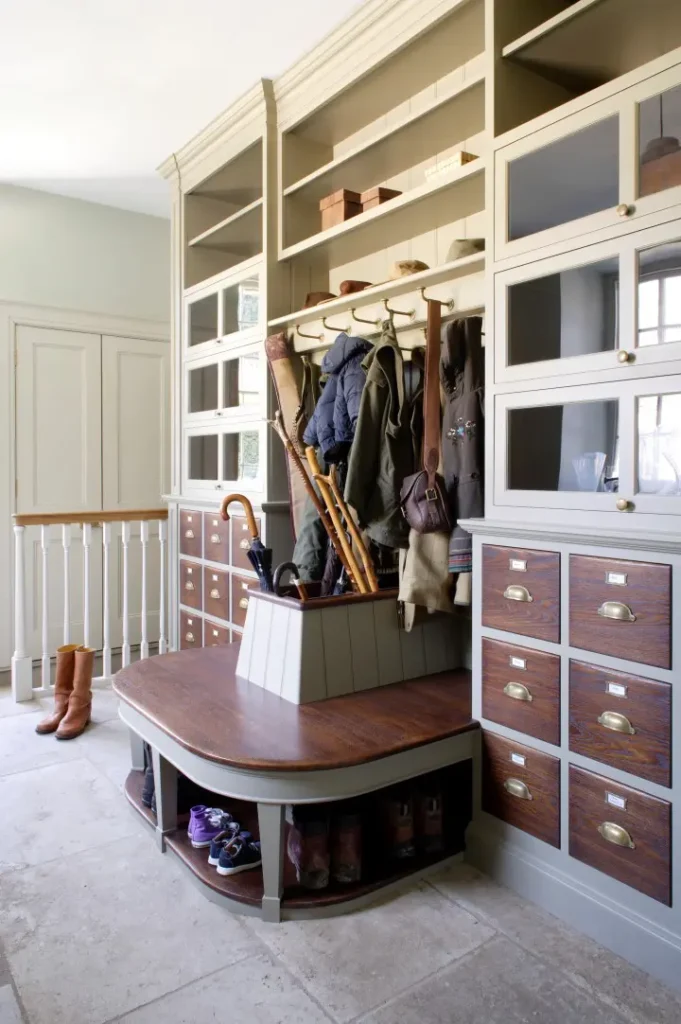
A dedicated mudroom is especially beneficial in certain homes and climates where daily life naturally brings in more mess, gear, and movement. Households with children or several family members quickly see the value of this space. With multiple people coming and going, there are more shoes, backpacks, jackets, and everyday items that need a landing zone. A mudroom keeps these belongings organized and prevents them from piling up in hallways or living rooms.
Homes with active lifestyles, whether that means sports, hiking, gardening, or frequent outdoor hobbies, benefit even more. Instead of tracking dirt and equipment through the house, gear can be dropped, sorted, and stored right at the door. The same is true in regions with rain, snow, sand, or strong seasonal changes. A mudroom provides a practical place for wet boots, sandy flip-flops, heavy coats, or beach bags to stay contained.
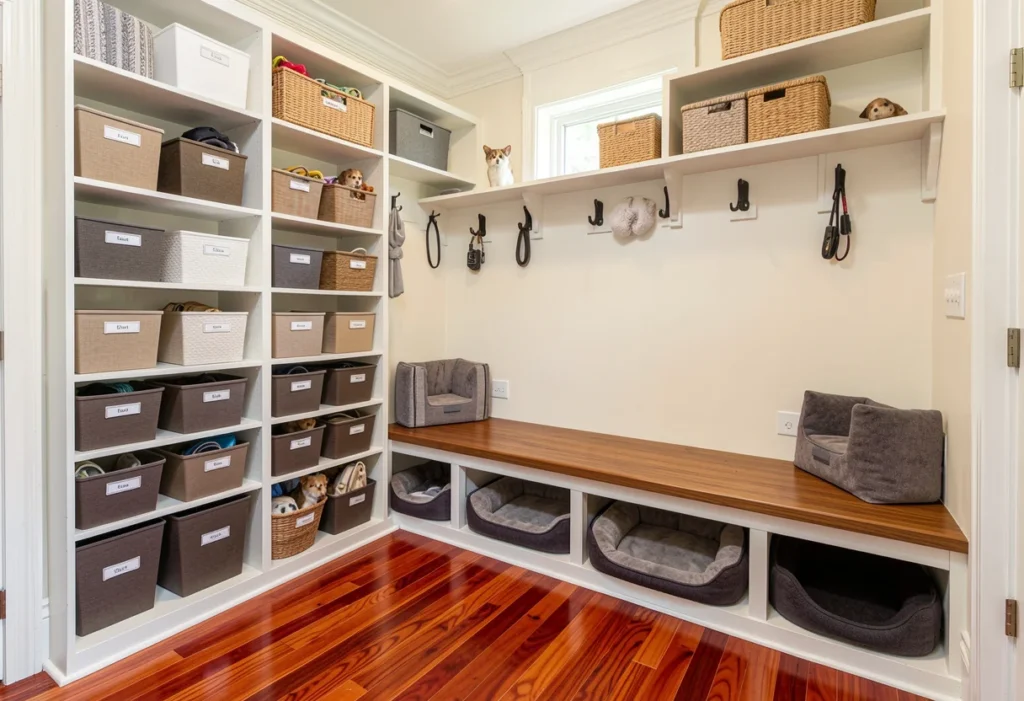
Families with pets also find a mudroom invaluable. Leashes, treats, towels, and pet supplies can all live in one place, and muddy paws can be wiped before pets run into main living areas. For households with busy schedules and constant “in-and-out” routines, a mudroom supports grab-and-go organization, everything from school bags to work essentials can be staged and ready.
Ultimately, a mudroom creates a protective buffer between the outdoors and the rest of the home. It helps safeguard flooring, control clutter, and stop chaos from spreading into your living spaces, making daily life smoother, cleaner, and far more organized.
When an Entryway Is the Better Solution
Not every home has the square footage for a separate mudroom, and in many cases, the entryway naturally becomes the primary landing zone for everyday belongings. For smaller households or homes where only a few people are coming and going each day, a well-designed entryway system can work exceptionally well. When there is limited outdoor gear, fewer sports items, minimal seasonal clothing, or only a small rotation of shoes and jackets, the entryway can easily handle the storage without becoming overloaded.
An entryway is also ideal when storage needs are generally lighter or when a clean, minimal look is preferred. For people who dislike visual clutter and want a space that feels open and calm the moment they walk in the door, a streamlined entryway solution is often the best fit. It’s especially practical in homes where space is narrow or compact, such as apartments, townhomes, or smaller single-family houses.
With thoughtful planning, an entryway can still perform extremely well as a functional hub. Incorporating a few strategic pieces like hooks, a slim console, baskets, or a small bench allows it to handle daily essentials without feeling crowded or overwhelming. Even without a dedicated mudroom, the right entryway design can keep your home organized, welcoming, and visually appealing.
Storage Needs: How They Differ Between the Two Spaces
Although both spaces collect belongings, what gets stored in each is very different, and that difference shapes how the space should be designed.
Mudroom storage
The mudroom is built to handle bulkier, messier, and more frequently used everyday items. Common mudroom storage includes boots and everyday shoes, heavy coats and outerwear, backpacks and briefcases, and all kinds of sports bags and equipment. It often houses practical items like cleaning rags or floor mats for wiping up messes, as well as pet essentials such as leashes, food containers, and towels for muddy paws. Garden accessories, outdoor tools, and seasonal gear also tend to land here. Because these items are larger and often dirty or wet, the mudroom requires more rugged materials and more generous storage solutions.
Entryway storage
Entryway storage is lighter and more streamlined. This space typically holds small, daily essentials that you grab on your way out the door or set down when you come home. Common entryway items include keys, wallets, sunglasses, light jackets or wraps, and umbrellas. It may also temporarily hold mail, packages, or guest shoes during visits. Since these items are smaller and generally clean, entryway storage can be more minimal and visually oriented, relying on decorative bowls, slim tables, hooks, or compact cabinets.
Understanding these differences is key to determining how much storage you truly need, and where you need it. By identifying what actually lives in each space, you can design a mudroom or entryway that fits your lifestyle instead of overcrowding the home with unnecessary or poorly planned storage.
Layout Considerations for a Mudroom
Mudrooms are designed to manage some of the toughest household challenges, constant foot traffic, moisture, dirt, and piles of daily belongings—so the layout must fully support that level of real-life activity. A well-planned mudroom focuses on convenience, durability, and easy cleanup, making it simple for everyone to come inside, get settled, and keep mess from spreading into the rest of the home.
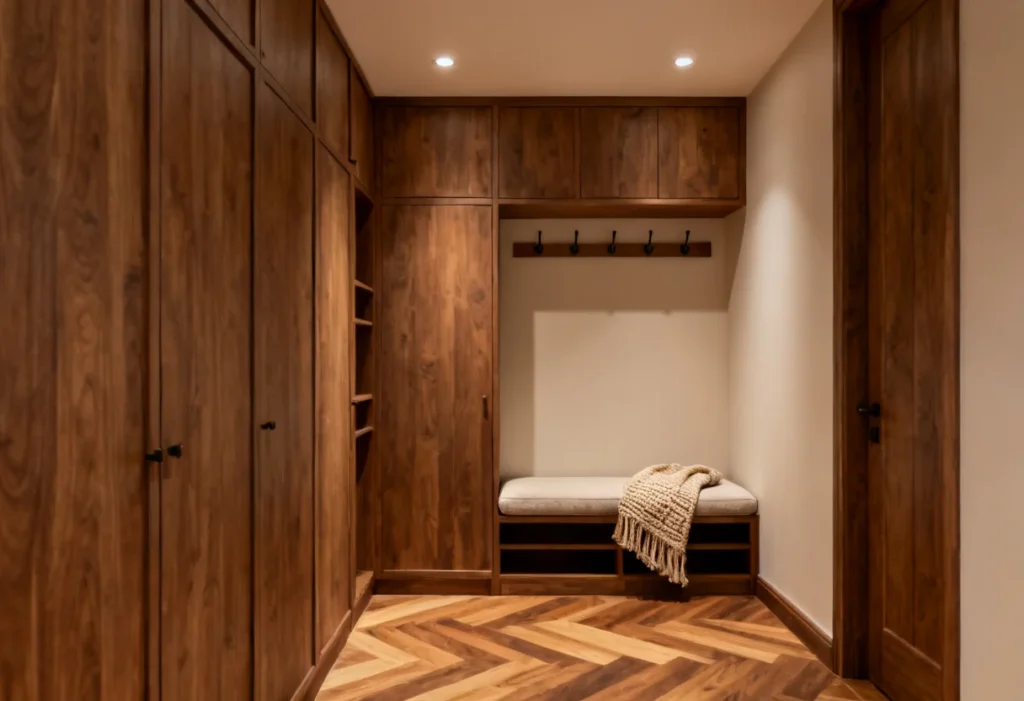
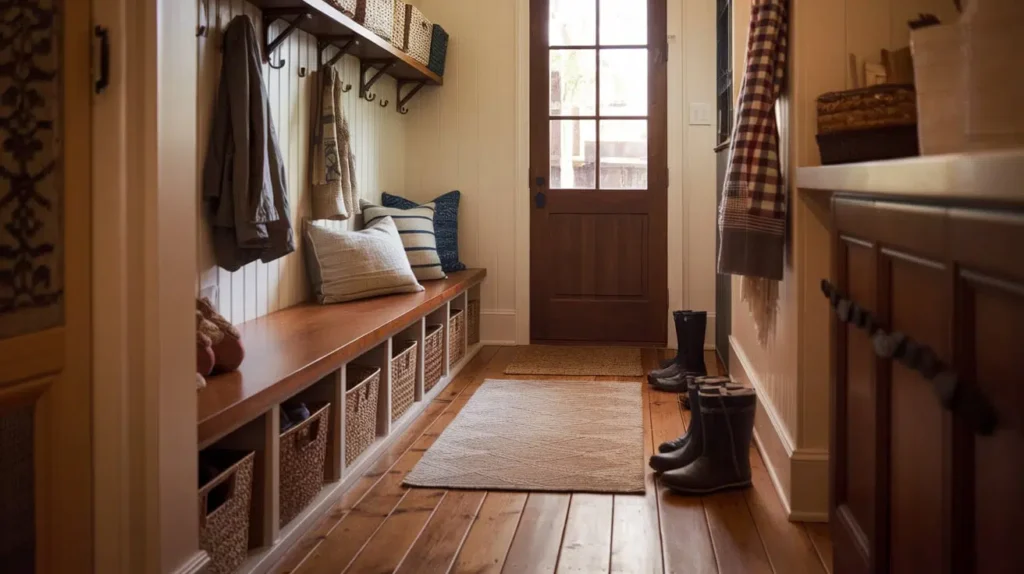
Built-in seating and benches play a key role in this process. A comfortable bench gives family members a place to sit while removing shoes or boots, which helps contain dirt and prevents it from being tracked through hallways and living areas. Beneath the bench, additional storage can be integrated for baskets or seasonal footwear, making the space work even harder.
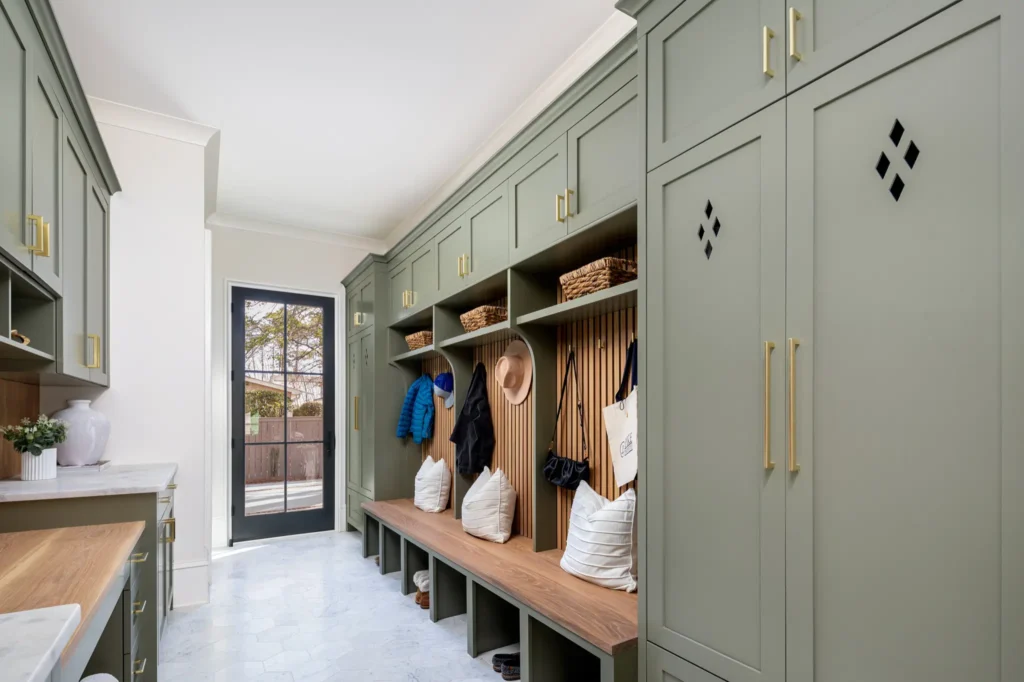
Cubbies and lockers bring order to busy households by giving each person a clearly designated space. When children have their own spot for backpacks, coats, and shoes, it becomes easier for them to manage their belongings independently, no more piles on the floor or frantic searching before school. These personalized compartments reduce confusion and keep the room visually organized.
Because footwear often comes in wet or muddy, shoe storage with ventilation is essential. Open shelves or slatted designs allow air to circulate so shoes can dry properly, helping to prevent odor and mildew while also keeping pairs easy to find.
Durable materials are another must-have. Tile, stone, or waterproof flooring stands up to moisture and grit, while wipeable wall surfaces or protective wall panels make cleaning quick and worry-free. These finishes ensure the mudroom continues to look neat, even after heavy daily use.
Finally, hooks at multiple heights make the space accessible to everyone. Higher hooks accommodate adults’ coats and bags, while lower ones are easy for children to reach, encouraging them to hang up their belongings instead of dropping them on the floor. Guest hooks add extra convenience during visits.
When all of these features work together, the mudroom becomes far more than a pass-through, turns into an efficient, family-friendly transition zone that keeps the rest of the home cleaner, calmer, and more organized.
Layout Considerations for an Entryway
An entryway usually has less square footage than a mudroom, which means storage needs to be more subtle and thoughtfully integrated into the overall design. Instead of heavy-duty utility features, the goal is to provide just enough organization to support daily routines while keeping the space open, welcoming, and visually appealing.
Slim furniture pieces are especially important in an entryway. A narrow console table, floating shelf, or compact cabinet offers a landing spot for keys, mail, and small accessories without blocking walkways or making the area feel cramped. These pieces provide function while maintaining an airy, uncluttered look.
Decorative hooks or low-profile racks are another smart solution. They supply practical hanging space for light jackets, hats, or handbags, yet they blend seamlessly with the home’s aesthetic. Because they double as décor, they prevent the entryway from looking like a storage zone while still keeping essentials within easy reach.
Hidden storage also plays a big role. Closed cabinets, drawers, or stylish baskets keep everyday items contained so visual clutter doesn’t dominate the space. This helps the entryway feel calm and organized, even when it’s handling the daily flow of comings and goings.
Strategic lighting enhances the overall atmosphere. Soft lighting near mirrors, artwork, or a console table creates a warm, inviting glow that welcomes both residents and guests. Finally, thoughtful mirror placement adds both style and practicality. A mirror near the door offers a convenient last look before heading out, while also reflecting light and making small spaces feel larger.
Storage Solutions That Work Best in a Mudroom
A functional mudroom thrives on structure, with storage solutions designed to keep every item in its place while supporting the busy flow of daily life. One of the most effective ways to create order is with lockers or individual sections. Assigning each family member their own dedicated compartment makes it easy to store backpacks, coats, shoes, and personal items, reducing confusion and helping everyone manage their belongings independently.
Deep drawers add another layer of practical storage. They are ideal for hats, gloves, scarves, and other bulky accessories that don’t fit neatly on hooks or shelves. Overhead cabinets make use of vertical space, providing a spot for less frequently used items such as seasonal décor, extra linens, or backup supplies. Pull-out baskets are perfect for sports gear, dog toys, or miscellaneous items that don’t sit well on standard shelving, keeping them contained and easy to access.
For families that generate a lot of dirty clothing or outdoor wear, integrating laundry into the mudroom can be a game-changer. A washer and dryer in the same space make handling muddy sports uniforms, wet coats, and soiled towels far easier, reducing the spread of dirt throughout the home.
When thoughtfully organized with these elements, a mudroom becomes more than just a drop-off point, it transforms into a highly functional, efficient hub that streamlines daily routines, protects the rest of the home from mess, and keeps every family member’s belongings neatly in place.
Storage Solutions That Work Best in an Entryway
Entryway storage should be lighter than a mudroom’s but still intentional, providing just enough organization to keep daily essentials accessible while maintaining a clean, welcoming look. An entry console with drawers is a key component, offering a place to store small items like mail, gloves, or other loose belongings so they don’t accumulate on open surfaces. Pairing the console with a tray or organizer helps keep keys, wallets, and sunglasses all in one predictable location, making it easy to grab what you need on the way out the door.
A stylish umbrella stand adds both function and flair, keeping wet umbrellas upright and preventing puddles from forming on the floor. A slim shoe cabinet provides space for a few frequently used pairs, helping maintain a tidy appearance without taking up valuable walking space. Wall-mounted shelves can further enhance storage without consuming floor area, offering spots for decorative accents, baskets, or everyday items that need a home.
By combining these thoughtful storage elements, an entryway can stay organized, visually calm, and fully functional, even in a compact space, providing a smooth transition from the outdoors to the home while leaving a positive first impression for both residents and guests.
Safety Considerations You Shouldn’t Ignore
Safety is a key consideration in both mudrooms and entryways, as these high-traffic spaces can easily become hazards if not thoughtfully designed. In a mudroom, non-slip flooring is essential, especially during wet or snowy seasons, to prevent slips and falls when entering the home. Hooks, shelves, and cabinets should be securely anchored to the walls, ensuring they can safely hold coats, bags, and other heavy items. It’s also important to avoid overcrowding high shelves with bulky or heavy belongings, which can create a risk of falling objects.
Entryways, while typically lighter in storage, also require careful attention to safety. Keeping walking paths clear ensures smooth movement, even during busy arrivals and departures. Rugs should be secured with non-slip backing or tape to prevent tripping, and lighting should be sufficient for nighttime use, allowing residents and guests to navigate the space safely.
By prioritizing these safety measures, both mudrooms and entryways can remain practical, functional, and secure, protecting family members and visitors while supporting daily routines.
Which One Adds More Value to a Home?
Both mudrooms and entryways add appeal to a home, but they do so in very different ways. Mudrooms are particularly valuable for busy households, including families, pet owners, and frequent travelers. They provide a dedicated landing area for shoes, coats, bags, and gear, helping to keep daily life organized and reducing the spread of dirt and clutter throughout the home. Beyond practicality, a well-designed mudroom can create a sense of order and calm in even the most hectic households.
Entryways, on the other hand, shape the emotional perception of your home. This is the space that greets guests and sets the tone for the entire interior. A well-styled entryway conveys care, attention to detail, and warm hospitality, making visitors feel welcomed while maintaining a sense of tidiness and style.
Whether you’re adding a new mudroom or entryway, or improving the one you already have, thoughtful design enhances everyday living and functionality. At the same time, it can increase your home’s long-term value, making these spaces a smart investment both for comfort and for future resale.
If your home feels crowded near the doors, that usually means your system isn’t working hard enough for you. Whether you need a dedicated mudroom or a refined entryway, thoughtful storage can change the way your space supports your routine.
Picture walking in with arms full of groceries, kids dropping backpacks, shoes coming off, and everything having a clear landing place. No piles near the door. No frantic searches for keys. No wet boots on bedroom floors.
It starts with assessing how your household truly uses the space, not how it “should” look in a catalog. From there, the right design choices make organization feel natural instead of forced.
When you’re ready to create an entry zone that actually works for your life, consider planning your layout, upgrading storage, or consulting a professional designer who can turn everyday traffic patterns into a smooth, organized system.