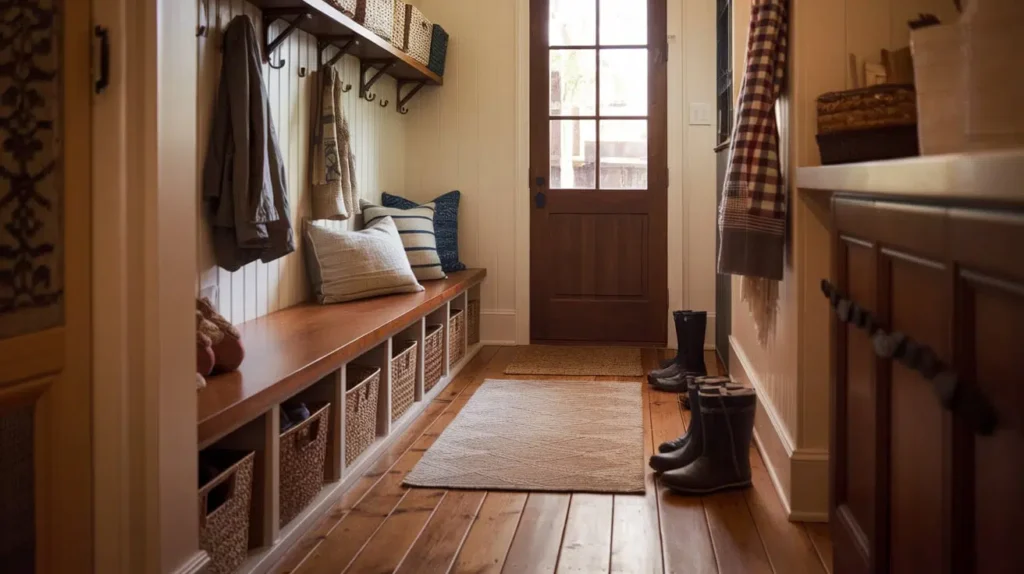
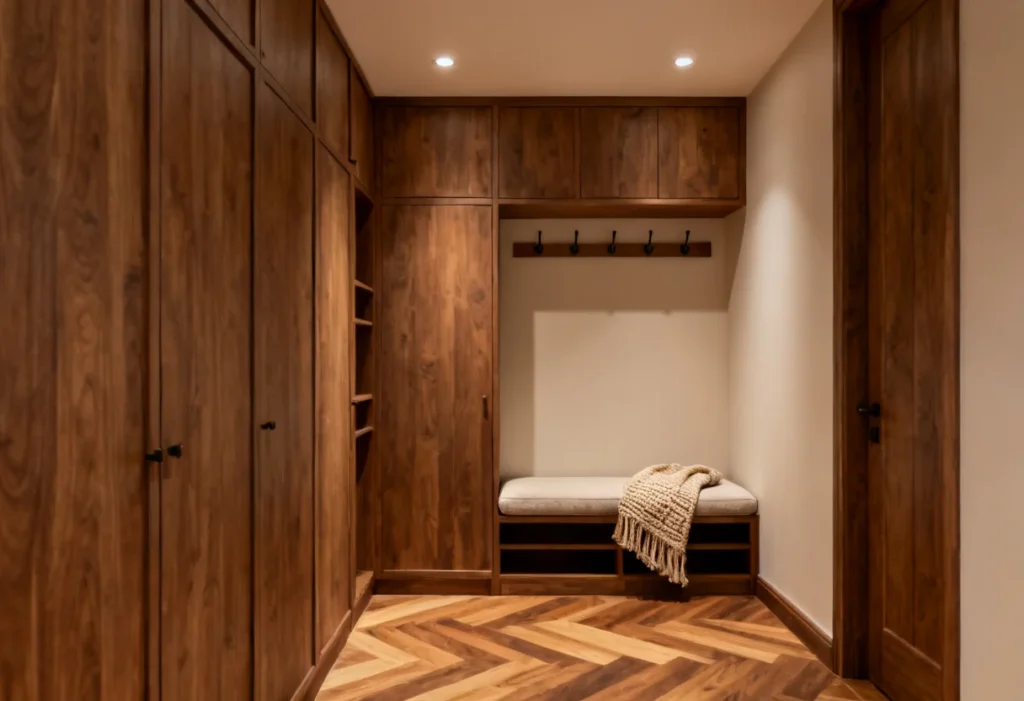
A mudroom creates structure at the entry point of a home and improves how people manage daily items, movement, and storage by providing a clear place for everything used when coming in and out of the house. Many homes lack a dedicated transition space, which leads to everyday clutter building up in high-traffic areas. Shoes pile up near doors, bags get dropped on chairs, and jackets end up on random surfaces, creating disorganization right at the main entry points of the home. Over time, this disrupts flow and makes the space feel constantly messy.
St. James Closets designs custom storage systems that transform entry areas into functional mudrooms that support cleaner routines and more organized living. These tailored solutions help define storage zones for shoes, outerwear, and everyday essentials, improving both movement and overall home flow while keeping entryways consistently tidy and easy to manage.
What a Mudroom Actually Is
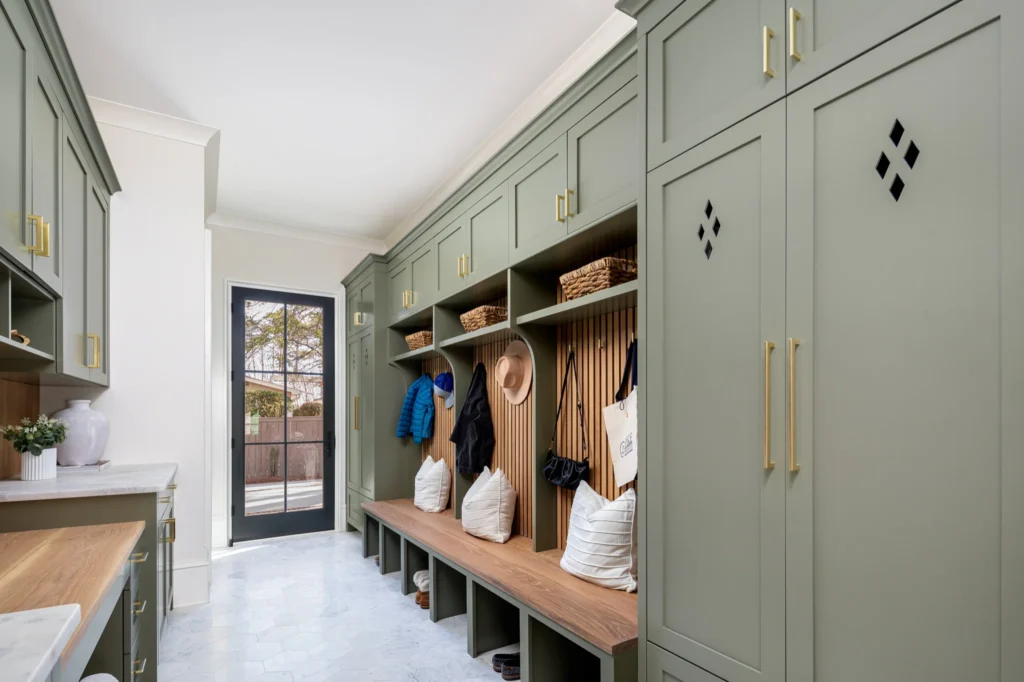
A mudroom is a dedicated transition space between the outdoors and the main living areas that functions as an organized entry storage zone for everyday use. It provides a clear place to manage shoes, jackets, bags, sports gear, and other daily essentials so they do not spread into the main parts of the home. By containing these items in one structured area, a mudroom reduces clutter inside the home and helps maintain a cleaner, more organized living environment. It also creates structure from the moment you enter, establishing a sense of order and routine that supports smoother daily movement and better overall home flow.
Why Modern Homes Need a Mudroom
Modern homes handle more items than before. Daily life brings constant movement, frequent transitions, and repeated entry and exit throughout the day. A mudroom supports that movement with clear organization and defined storage.
Entry Clutter Builds Up Fast
Shoes and bags accumulate quickly near entry points. People drop items immediately when they arrive home. Surfaces like benches, floors, and chairs become crowded with daily essentials. Clean spaces turn messy within hours when no storage system exists to contain them.
A Mudroom Restores Order Immediately
Storage zones organize daily items into specific places for shoes, jackets, bags, and gear. Every item has a defined location that supports routine use. The entry stays clean and structured even during busy days. This organization improves flow and creates a more controlled and functional home entrance.
How a Mudroom Improves Daily Living
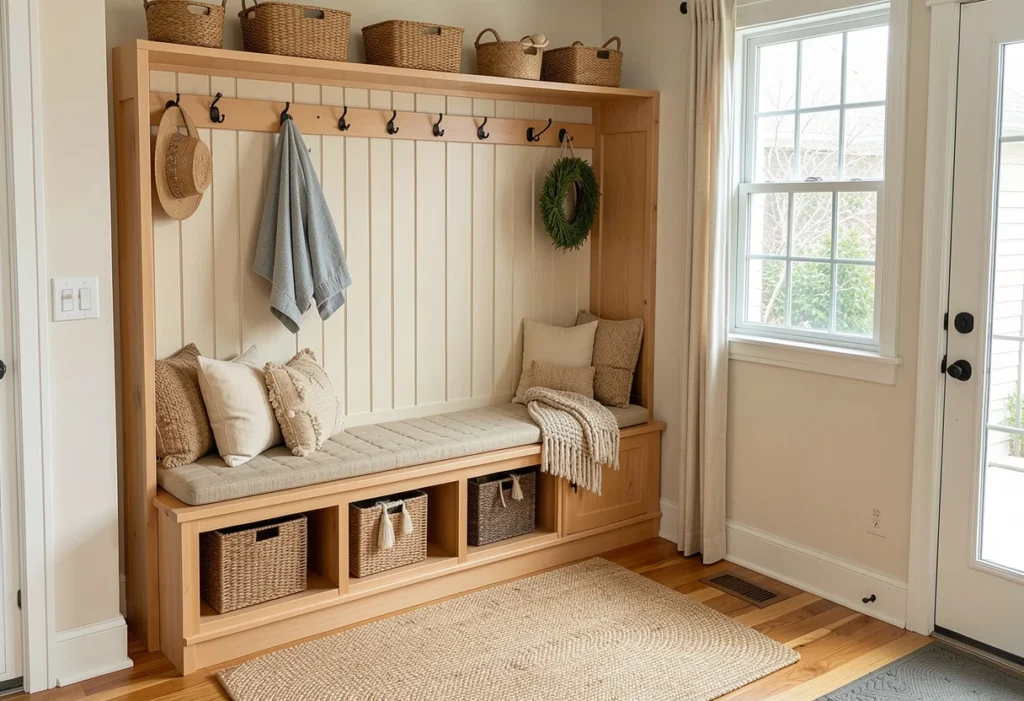
A mudroom improves how households function by supporting routine efficiency and creating structure at the home’s entry point. It reduces daily friction by giving every frequently used item a consistent place, which makes movement in and out of the home more organized and predictable.
Faster Morning Routines
Items stay in one place instead of spreading across multiple rooms. Shoes, bags, keys, and jackets remain stored in dedicated zones that are easy to access. People find what they need quickly without searching through different areas of the home. This reduces stress during busy mornings and creates smoother, more efficient daily routines. Time savings add up each day and help households move with greater ease and consistency.
Cleaner Living Spaces
Outerwear stays contained in the entry area instead of being carried into living rooms, bedrooms, or dining spaces. Dirt, moisture, and outdoor debris remain at the threshold rather than spreading throughout the home. Surfaces stay clearer, and rooms require less frequent tidying. Living areas remain organized and more comfortable for daily use, even in high-traffic households where movement is constant.
Essential Features of a Functional Mudroom
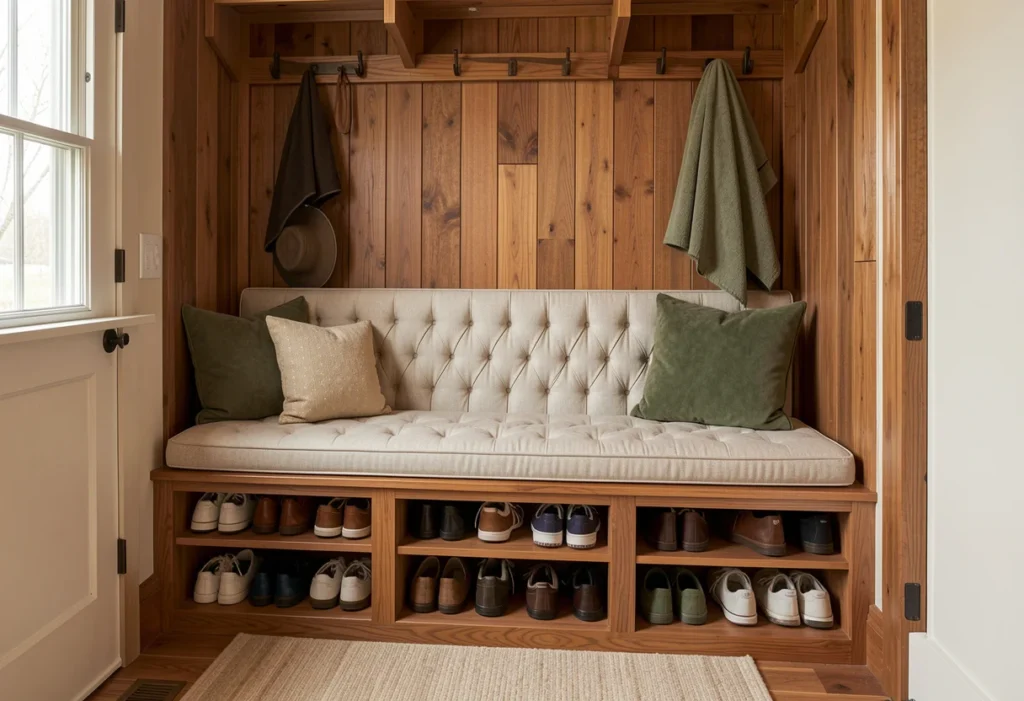
A good mudroom needs structure and storage because it serves as the home’s main transition zone between outdoor activity and indoor living. Each feature plays a role in daily function, helping manage movement, reduce clutter, and support more organized routines throughout the day.
Built-In Storage Cabinets
Built-in cabinets hold everyday items such as shoes, bags, umbrellas, and seasonal gear in dedicated, concealed compartments. They keep clutter out of sight, which helps maintain a clean and organized entry area even during busy periods. By providing closed storage, they protect items from visual mess and environmental wear while improving overall order. This creates a more polished and structured first impression when entering the home.
Bench Seating for Convenience
Bench seating adds both function and comfort by giving household members a stable place to sit while putting on or removing shoes. It reduces the need to balance or rush during transitions in and out of the home. This feature also supports daily flow by creating a natural pause point in the entryway, helping organize movement and reduce congestion during peak times such as mornings or arrivals.
Hook Systems for Easy Access
Hook systems organize jackets, coats, hats, and bags in a simple, visible layout that supports fast access. Items remain off the floor and are easy to grab when leaving or returning home, which improves efficiency during daily routines. Hooks also help maintain order by assigning clear spots for frequently used belongings, reducing misplacement and keeping the entryway consistently functional and tidy.
Custom Cabinet Systems in a Mudroom
Custom cabinets create structure in entry spaces by organizing movement, reducing clutter, and maximizing every available area for practical daily use. They turn the mudroom into a functional storage zone where each section serves a clear purpose and supports smoother household routines.
Upper Cabinets for Seasonal Storage
Upper cabinet spaces store items such as hats, gloves, scarves, and other seasonal essentials that are not needed every day. These items remain neatly organized and out of the way, freeing up lower, more accessible areas for frequently used belongings. This elevated storage also helps maintain a cleaner visual space while keeping seasonal items protected and easy to retrieve when needed.
Lower Cabinets for Daily Essentials
Lower cabinet sections hold everyday items such as shoes, bags, and household supplies that require frequent access. These compartments keep essentials within easy reach, making daily routines more efficient when entering or leaving the home. By assigning a dedicated space at ground level, lower cabinets help reduce clutter and support a more organized and functional entryway.
Shoe Storage That Keeps Entry Areas Clean
Shoes create the most common source of entry clutter, especially in busy households where multiple people come and go throughout the day. Proper storage solutions address this issue by creating structure, improving accessibility, and keeping the entryway consistently organized.
Cubbies for family organization assign each person a dedicated space, which helps keep shoes separated and easy to locate. This system simplifies daily routines because everyone knows exactly where their items belong, reducing confusion and maintaining order even during high-traffic periods.
Tilt-out drawers provide a more concealed storage option where shoes stay completely out of sight while remaining easy to access. This design keeps floors clear, reduces visual clutter, and helps the entry area maintain a clean, streamlined appearance. Together, these storage methods improve both functionality and overall visual organization in the mudroom.
Mudroom Storage for Busy Families
Families need strong entry systems because constant movement in and out of the home quickly leads to clutter, misplaced items, and disrupted routines. A well-designed mudroom supports this daily flow by creating defined storage zones that keep everything organized and easy to access.
Sports Gear Storage for Active Homes
Sports equipment stays in one designated area instead of being scattered across bedrooms, living rooms, or garages. Items such as balls, helmets, gloves, training gear, and shoes remain grouped together in a structured system, making them easy to find before activities and easy to return afterward. This organization reduces frustration, prevents damage or loss of equipment, and helps maintain cleaner shared spaces. Even in highly active households, rooms stay more orderly, safer, and ready for everyday living because gear has a clear and consistent home.
School Bag Storage for Daily Routines
School bags stay in a dedicated, accessible location near the entryway, ready for use each morning and properly stored after school. This system supports smoother routines because children and parents can quickly gather books, lunch kits, and essentials without searching through different rooms. It reduces last-minute stress, prevents forgotten items, and creates a more predictable start to the day. Over time, this structure builds consistency in daily habits and helps the entire household move through mornings with greater ease and efficiency.
Mudroom Design for Small Spaces
Even small homes benefit from mudroom systems because smart design improves efficiency, reduces clutter, and creates structure in compact entry areas. Thoughtful storage planning ensures that even limited square footage supports daily routines without feeling crowded.
Vertical storage maximizes space by turning walls into functional storage zones. Instead of relying on floor area, items are stored upward, which increases capacity without requiring physical expansion. This approach keeps essentials organized while preserving open walking space in the entryway.
Slim cabinets are ideal for narrow entryways because compact designs save space while still providing strong functionality. These units fit seamlessly into tight layouts, allowing shoes, bags, and daily essentials to be stored efficiently without blocking movement. Together, these solutions help small homes stay organized, functional, and visually clean.
Open vs Closed Storage in Mudrooms
Both storage types improve organization by working together to create balance, efficiency, and visual clarity in entry spaces. A well-designed mudroom uses a combination of accessible and concealed storage to support different daily needs while maintaining order.
Open Storage for Daily Use Items
Hooks and shelves provide quick access to frequently used items such as jackets, bags, and small essentials. Items stay visible, which makes them easy to grab when leaving or returning home. This setup supports fast-paced routines and helps households stay efficient during busy times, while still keeping essentials neatly assigned to specific spots.
Closed Storage for Clean Appearance
Cabinets and enclosed compartments hide clutter by storing shoes, seasonal gear, and less frequently used items out of sight. This creates a cleaner, more streamlined appearance in the entryway. Spaces look organized and visually calm, even in active households, while still maintaining full functionality behind closed doors.
Mudroom Organization for Seasonal Changes
Homes change with the seasons, and storage systems must adapt to shifting household needs throughout the year. A well-designed mudroom supports these transitions by adjusting how space is used for different types of items.
In winter, storage requires extra capacity because bulky coats, boots, scarves, and heavier outerwear take up more room. Mudrooms manage these larger items efficiently by providing dedicated zones that keep everything organized, accessible, and contained without overwhelming the rest of the home.
In summer, storage becomes lighter and more simplified as heavy gear is replaced with smaller, seasonal essentials. This allows the space to feel more open, minimal, and visually clean while still maintaining structure for daily use items. Together, this seasonal flexibility keeps the entryway functional, organized, and easy to manage year-round.
Lighting and Design in a Mudroom
Good lighting improves usability in entry spaces by making daily routines easier, faster, and more comfortable. Bright lighting increases visibility so items like shoes, bags, and essentials are easy to find, while also reducing shadows in storage areas and making shelving, hooks, and cabinets clearer and more functional. This helps the space feel more open, organized, and efficient for everyday movement. At the same time, clean finishes improve home aesthetics by creating a calm and cohesive atmosphere through neutral colors and simple materials that reduce visual clutter. Together, good lighting and thoughtful finishes make entry areas feel more welcoming, visually balanced, and better connected to the rest of the home’s interior design.
Mudrooms and Home Organization Systems
Mudrooms connect to the entire home system by creating a structured entry point that supports better organization throughout every space. Entry control reduces indoor clutter by ensuring items stop at the door, preventing shoes, bags, and outerwear from spreading into living areas and helping the home stay consistently clean and organized. Storage flow improves household efficiency by giving every item a designated place, which makes daily routines easier, faster, and more predictable. Together, this system strengthens overall home function by turning the entryway into an organized foundation for the rest of the living space.
Custom Mudroom Layouts by St. James Closets
Every home has different entry needs, and custom design improves performance by aligning storage systems with how each household actually lives and moves. Personalized storage planning creates layouts that match daily routines, ensuring that shoes, bags, and outerwear are placed exactly where they are needed most. This makes the space more functional, more intuitive, and easier to maintain over time.
Professional installation ensures accuracy in every detail, from alignment to spacing to secure fitting of each component. This precision allows systems to fit properly within the space and perform consistently in daily use. Together, thoughtful planning and expert installation create entry systems that are reliable, efficient, and tailored to long-term household needs.
Why a Mudroom Adds Value to a Home
Mudrooms improve both function and overall appeal by creating organized entry spaces that enhance daily living and strengthen a home’s perceived value. Clean entry areas improve first impressions because order creates a strong visual impact the moment someone walks in, setting the tone for the rest of the home. A tidy, well-structured entryway makes the space feel well maintained, intentional, and easier to navigate, which leaves a lasting positive impression on both guests and potential buyers.
Functional storage adds practical value by increasing usability through clearly defined spaces for shoes, bags, outerwear, and daily essentials. This reduces clutter in main living areas and supports smoother routines throughout the home. Over time, this added organization improves how the home functions on a daily basis while also making it more attractive in the real estate market, as buyers often recognize and appreciate built-in systems that simplify everyday living.
How St. James Closets Builds Better Mudrooms
Design matters in entry storage because it directly affects how a home functions every day, from morning routines to end-of-day organization. St. James Closets creates systems built for real homes by prioritizing function and adapting layouts to match how families actually live.
Focusing on function first ensures that storage supports daily routines in a practical and efficient way. Every detail, from cabinet placement to hook height, serves a clear purpose and contributes to smoother movement through the space. Custom design for real families means layouts reflect lifestyle needs, including storage volume, accessibility, and frequency of use. This approach keeps systems practical, easy to maintain, and effective over time, creating entry spaces that remain organized and reliable even with constant daily use.
In Conclusion
A mudroom improves how a home works every day by reducing clutter at entry points, supporting consistent routines, and creating structure where it matters most. It organizes movement in and out of the home, keeps everyday items contained, and helps maintain cleaner, more efficient living spaces. With the right design, entry areas become organized, functional, and easy to maintain. Thoughtful storage solutions, clear zones, and practical layouts ensure that everything has a place, making daily life smoother and more manageable while keeping the home visually clean and well-structured.
Why Every Home Needs a Mudroom
Your entryway sets the tone for your entire home, and a well-designed mudroom keeps clutter under control while simplifying daily routines. Even small improvements can make a noticeable difference in how your space feels, helping it stay clean, organized, and easy to manage. St. James Closets designs custom mudroom storage systems built for real families and real homes, with every detail focused on function, durability, and clean organization. Each layout supports daily use while maintaining a streamlined, cohesive look. Now is the right time to upgrade your entry space. Schedule a private consultation and turn your mudroom into a practical, organized, and reliable part of your home.