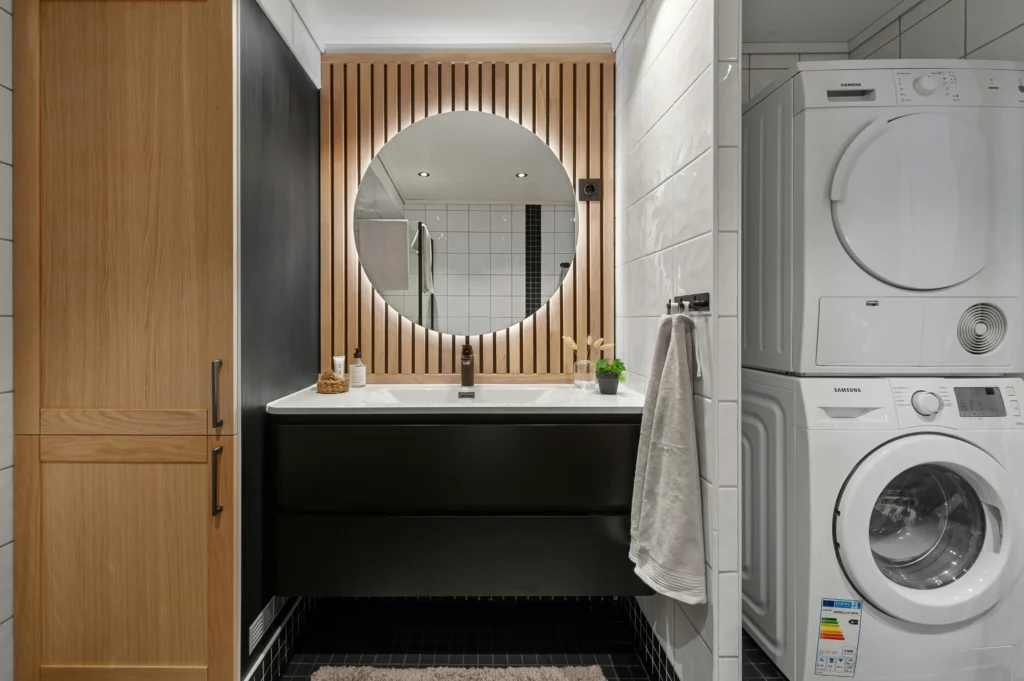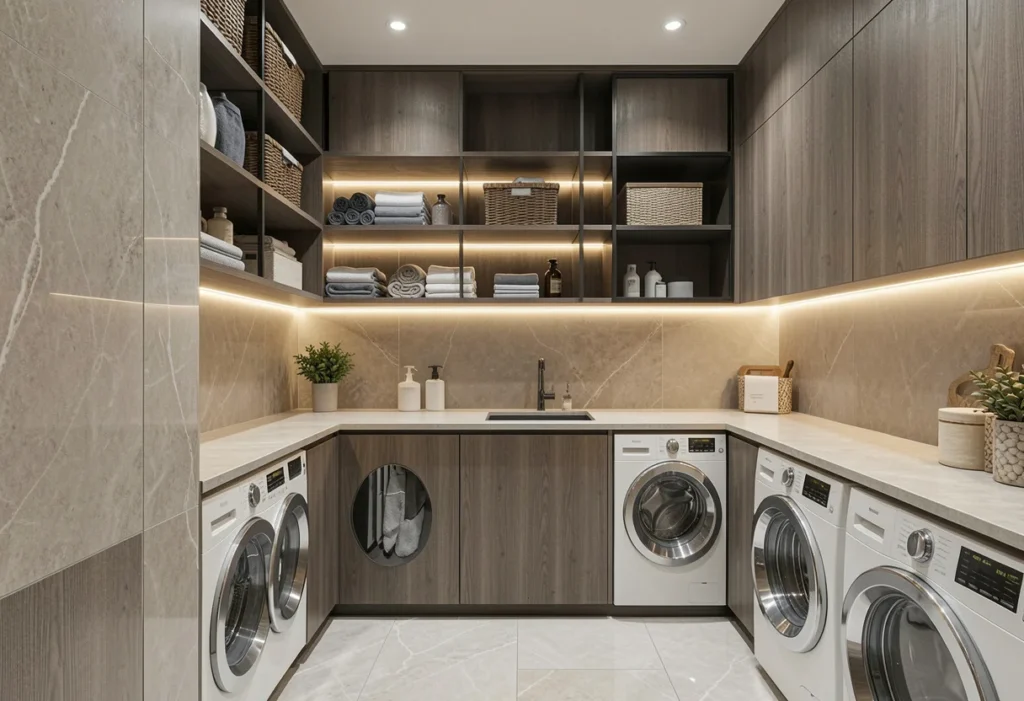

A well-planned laundry room does far more than house a washer and dryer, it supports daily routines, keeps supplies organized, and prevents household clutter from spilling into the rest of the home. Too often, laundry areas turn into cramped catch-all spaces filled with detergent bottles, mismatched baskets, cleaning tools, and overflow from nearby rooms. Without proper storage, even simple tasks like sorting, folding, or treating stains can feel frustrating and inefficient.
When storage is intentional, the laundry room becomes calmer, safer, and noticeably easier to use. Everything has a purpose and a place, from detergents and fabric softeners to hampers, hangers, and folding surfaces. Smart organization improves workflow, reduces mess, and helps families move through laundry tasks without unnecessary stress or wasted time.
This blog explores practical storage solutions, layout strategies, and maintenance habits that help create a laundry room that works efficiently without feeling crowded. Whether your laundry space is a full-size room, a hallway nook, or a compact closet, thoughtful organization can transform it into a functional, inviting area that supports your home’s daily rhythm.
Why Laundry Room Storage Matters
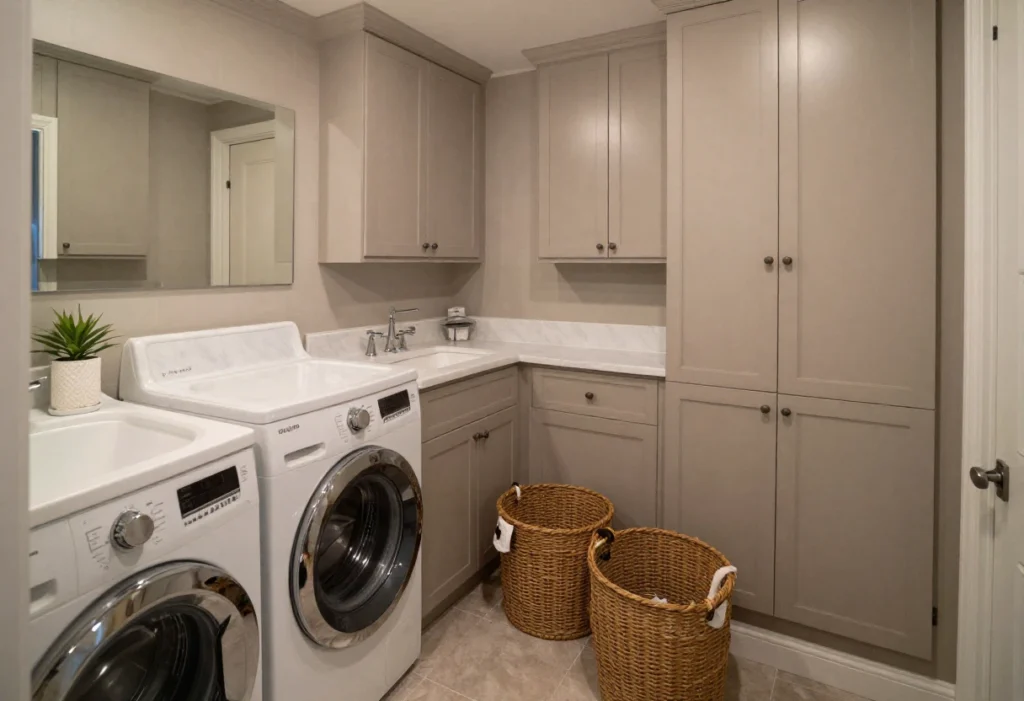
Laundry is a multi-step process that includes sorting, washing, drying, folding, and putting items away. Without a clear organizational system, each step takes longer than it should. Smart storage keeps supplies in predictable, easy-to-reach places, reduces unnecessary movement across the room, and prevents the frustration of buying replacements for items that were simply misplaced. When everything has a designated spot, the entire workflow becomes smoother and more efficient.
Proper storage also plays an important role in safety. Laundry rooms often contain detergents, stain removers, bleach, and other chemicals that can pose risks if left exposed. Cabinets, secured shelving, and contained bins keep these products safely out of reach of children and pets while minimizing spills, tipping, and accidental mixing of products. A well-organized space is not only convenient, it’s protective.
Beyond efficiency and safety, a tidy laundry room supports better daily habits. When counters are clear and storage is intuitive, people are more likely to fold clothes right away and return supplies to their proper place. This prevents clean laundry from piling up and stops clutter from spreading into bedrooms, hallways, and living spaces. In this way, smart laundry storage doesn’t just organize a room, it helps maintain order throughout the entire home.
Start With Layout Planning
Before adding shelves, cabinets, or organizers, start by understanding the space you’re working with. Measure wall height and width, note the exact dimensions of your washer and dryer, and pay attention to door swings and walkway clearance. These details help prevent common mistakes like blocking appliance doors, crowding folding areas, or making the room uncomfortable to move through. Thoughtful measurements ensure every storage addition supports function instead of creating obstacles.
Once the physical space is defined, focus on how you actually use the room. Divide the area into clear workflow zones such as washing and drying, sorting and folding, supply storage, and hanging or air-drying. Assigning each task its own location reduces back-and-forth movement and keeps tools where they’re needed most. When your laundry room is zoned intentionally, every step feels more natural, faster, and far less stressful.
Cabinet Storage for a Clean Look

Upper cabinets are essential for keeping everyday laundry supplies organized and out of the way. Wall-mounted cabinets provide a dedicated home for detergent, stain removers, fabric softeners, dryer sheets, and even extra paper goods like paper towels or cleaning wipes. By lifting storage off counters and floors, they reduce visual clutter and make the room feel more open and calm while keeping frequently used items within easy reach.
Tall pantry cabinets add another layer of efficiency, especially in laundry rooms that double as utility spaces. These vertical units are ideal for storing brooms, mops, vacuums, bulk detergent containers, and laundry baskets that would otherwise lean awkwardly in corners. With adjustable shelving, pantry cabinets adapt as your storage needs change, whether you’re housing seasonal supplies, large refill jugs, or specialty cleaning tools.
Choosing between closed storage and open shelving comes down to balance. Closed cabinets hide mismatched packaging and busy-looking bottles, creating a clean, streamlined appearance. Open shelves, on the other hand, work beautifully for decorative baskets, folded towels, and labeled bins that add warmth and accessibility. Blending both options gives you the best of function and style, keeping necessities concealed while still showcasing organized, attractive elements.
Shelving That Works Harder
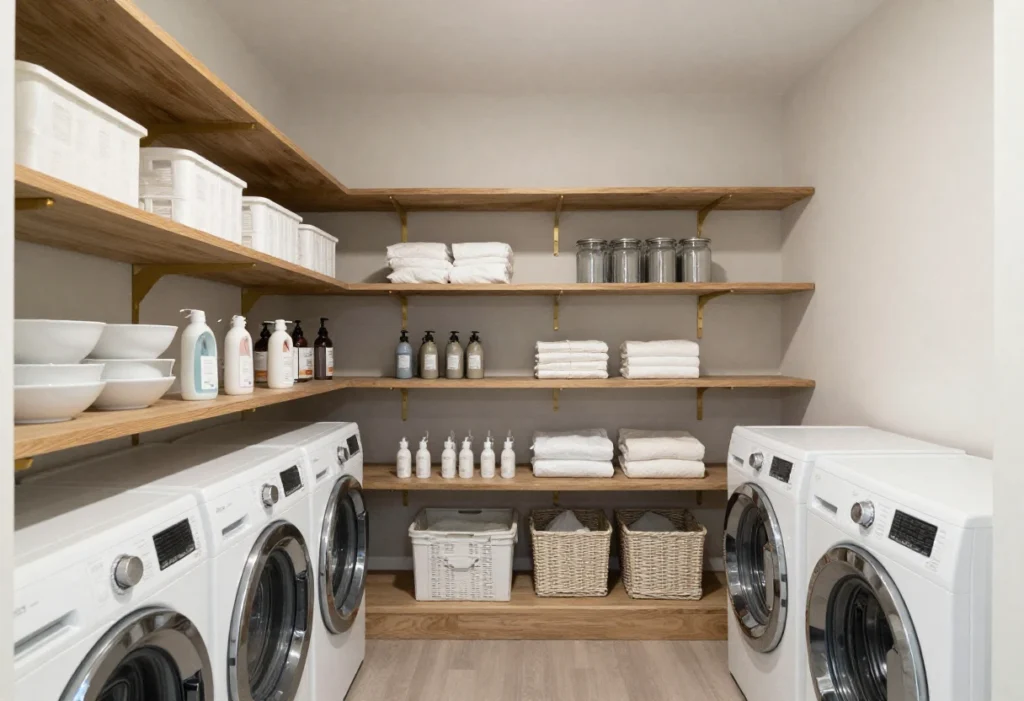
Floating shelves are an excellent way to add storage without visually crowding the room. Because they mount directly to the wall without bulky framing, they create a clean, open look while still offering practical space for baskets, detergents, folded towels, and décor. Installing floating shelves above washers, dryers, or folding counters uses vertical space that often goes unused and keeps everyday essentials within easy reach without taking up floor area.
Wire shelves provide a functional advantage in laundry environments where moisture is common. Their open design allows air to circulate freely, which helps prevent mildew and keeps damp cloths, sponges, and cleaning rags from trapping moisture. Wire shelving also works well for storing laundry baskets, air-drying supplies, and frequently used products because items stay visible and accessible while maintaining better ventilation than solid shelving.
Safety placement is just as important as storage capacity. Heavy detergent jugs, bulk cleaners, and large containers should always be stored at waist height or lower to avoid lifting strain and reduce the risk of items falling from overhead shelves. Lighter, less frequently used supplies can go higher, while daily-use products stay within comfortable reach. Thoughtful placement protects users while keeping the room efficient and easy to navigate.
Wall Storage Solutions
Pegboards and wall rails turn empty wall space into functional storage zones. Instead of filling cabinets with small tools, you can hang lint brushes, spray bottles, mini baskets, and even handheld vacuums directly on the wall. This keeps frequently used items visible and within reach while freeing up cabinet and counter space for larger supplies. Pegboards are especially useful because they’re customizable, hooks and bins can be rearranged as your needs change.
Hanging rods make air-drying simple and organized. Installing a rod above a folding counter or between cabinets allows delicate fabrics, workout gear, and hand-washed items to dry naturally without taking over chairs, doors, or furniture. It keeps clothing elevated, wrinkle-free, and contained in one area, improving airflow while preserving the overall tidiness of the room.
Door-mounted racks maximize space that’s often ignored. The back of laundry room doors can hold ironing boards, hooks for aprons or reusable bags, and pocket organizers for small tools and accessories. This solution adds storage without reducing floor space and keeps bulky or awkward items neatly tucked away while still easy to access when needed.
Basket and Bin Organization
Sorting baskets streamline the entire laundry process before a machine ever starts. Using multiple baskets allows you to separate lights, darks, towels, and delicates as soon as clothes come off. This prevents piles from forming on the floor and saves time on laundry day because each load is already prepared. Choosing slim or divided hampers also helps fit storage neatly into small or narrow laundry spaces.
Stackable bins make vertical space work harder, especially in compact laundry rooms or closets. Instead of spreading storage across the floor, stacked containers hold detergent refills, dryer sheets, cleaning rags, and extra supplies in one organized column. They increase capacity without blocking walkways or interfering with appliance doors, keeping the room open and safe to move through.
Labeled containers bring clarity and consistency to shared laundry areas. Clear labels for items like “detergent,” “stain remover,” “cloths,” or “lost socks” reduce confusion and help every household member know exactly where things belong. Labeling also supports long-term organization by encouraging people to return items to the right place instead of leaving them on counters or machines.
Keeping Supplies Safe and Accessible
Child-safe storage is essential in any laundry space that serves a family home. Detergents, bleach, pods, and cleaning chemicals should be kept in locked or high cabinets when children are present. This reduces the risk of accidental spills, ingestion, or skin contact. Using safety latches or dedicated chemical cabinets keeps hazardous items out of reach while still making them easy for adults to access when needed.
Ventilated storage prevents moisture problems that often develop in laundry rooms. Damp cloths, reusable cleaning pads, or recently used towels should never be sealed inside airtight containers. Instead, store them in breathable baskets, wire bins, or open shelves that allow airflow. Proper ventilation helps prevent mildew, unpleasant odors, and long-term fabric damage, keeping both the room and your supplies fresh.
Weight management improves both safety and shelf longevity. Heavy items like bulk detergent, water softener bags, or stacked linens should be distributed across multiple shelves rather than concentrated in one spot. Spreading weight reduces strain on brackets and cabinetry while lowering the risk of tipping, collapsing, or difficult lifting that could cause injury.
Common Laundry Room Storage Mistakes
Stacking bottles on top of machines
Placing detergent, cleaners, or baskets on top of washers and dryers may seem convenient, but it creates safety and performance issues. Machines vibrate during cycles, causing items to slide, fall, or spill. Over time, this can damage appliance surfaces and increase the risk of leaks or accidents. Instead, use nearby shelves or cabinets so supplies remain secure and accessible without interfering with operation.
Blocking appliance vents
Dryers and some washers require proper airflow to function efficiently and safely. Blocking vents with storage bins, cabinets, or stacked laundry restricts ventilation, which can lead to longer drying times, overheating, and potential fire hazards. Always leave adequate clearance around vent areas and ensure nothing obstructs exhaust paths. Good airflow keeps appliances running properly and extends their lifespan.
Ignoring wall height
Many laundry rooms waste valuable vertical space. Failing to use wall height limits how much you can store and forces clutter onto floors and counters. Installing upper cabinets, floating shelves, or wall-mounted systems helps organize supplies while keeping walking areas clear. Thoughtful vertical storage also improves workflow by keeping frequently used items within easy reach.
Storing chemicals within child reach
Laundry detergents, pods, and cleaning solutions can be harmful if touched or ingested by children. Storing them on open shelves or low cabinets increases risk. Child-safe storage means placing chemicals in locked cabinets or high shelves with safety latches. This protects your household while maintaining a functional and responsible storage system.
Skipping labels
Unlabeled bins and containers lead to confusion, misplaced items, and wasted time. Without labels, people tend to leave supplies wherever there’s space, slowly undoing your organization. Clear labeling helps everyone in the home return items to their proper place, keeps workflows consistent, and prevents unnecessary repurchasing of items you already own.
Why a Calm Laundry Room Improves Daily Life
Laundry is repetitive. When storage is thoughtful, the task becomes less frustrating and more predictable. Organized shelves, clear counters, and accessible supplies reduce wasted motion and improve household flow. A well-arranged laundry room supports habits that keep the rest of the home cleaner, too.
Your laundry room should make chores easier, not add stress to your day. With the right storage layout, you can keep supplies organized, surfaces clear, and routines running smoothly. Whether you need cabinets, shelving, or custom solutions, a better system starts with a plan. Take the next step and create a laundry room that truly works for your home.