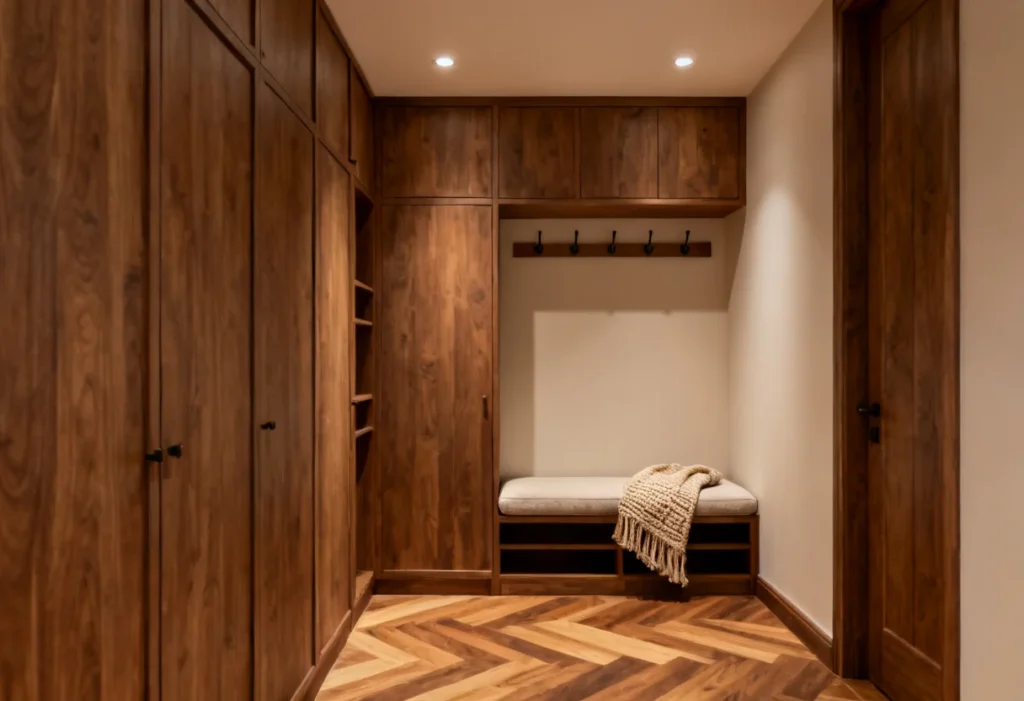
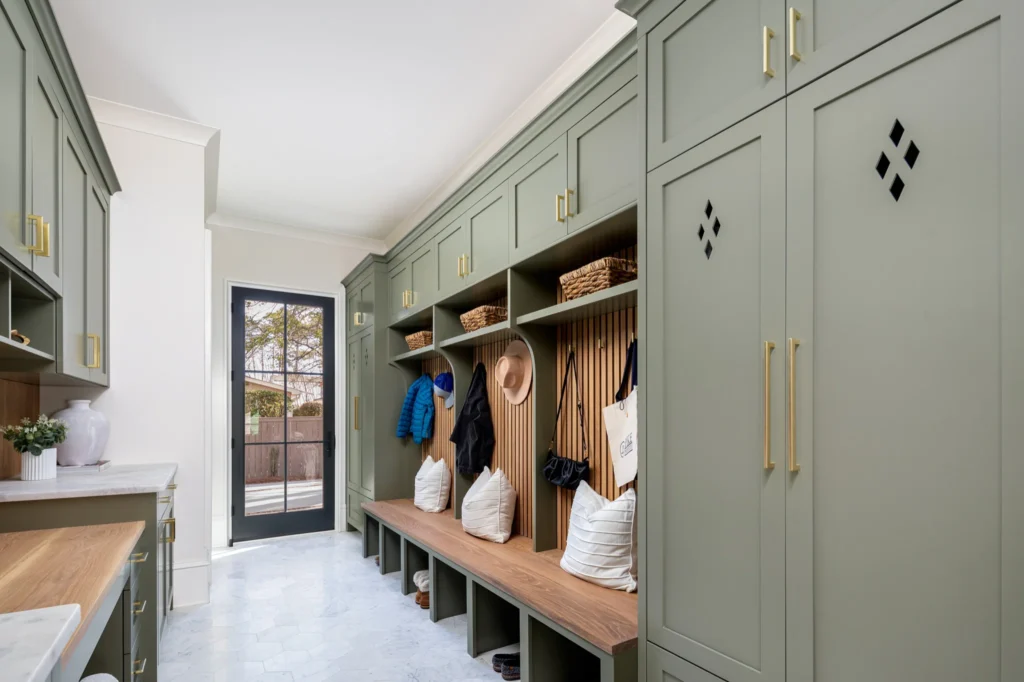
Effective mudroom storage becomes essential when rainy afternoons and snowy mornings track water, dirt, and clutter straight into your home. Without a well-planned system, shoes pile up by the door, coats drip onto floors, umbrellas tip over, and backpacks land wherever there’s open space. Over time, this daily buildup creates unnecessary stress and makes your entryway feel chaotic instead of welcoming. A thoughtfully designed mudroom keeps wet gear contained, protects interior surfaces, and supports smoother routines for busy households.
More than just a place to remove shoes, the mudroom serves as a hardworking buffer zone. It absorbs the mess before it reaches your living areas, preserving clean floors, organized closets, and tidy common spaces. When every item has a designated place, boots on racks, coats on hooks, bags in cubbies, family members naturally develop habits that maintain order. The result is less scrambling during rushed mornings and fewer piles accumulating by the door at the end of the day.
At St. James Closets, we design storage spaces that reflect how families truly move through their homes. A mudroom isn’t simply a drop zone, it’s a transition space between the outdoors and the comfort of your interior. It should feel functional yet polished, durable yet visually cohesive with the rest of your home. When planned correctly, it handles messy weather, active schedules, and everyday traffic without sacrificing organization or style, creating a seamless flow from outside to in.
Why Mudroom Storage Matters During Wet Seasons
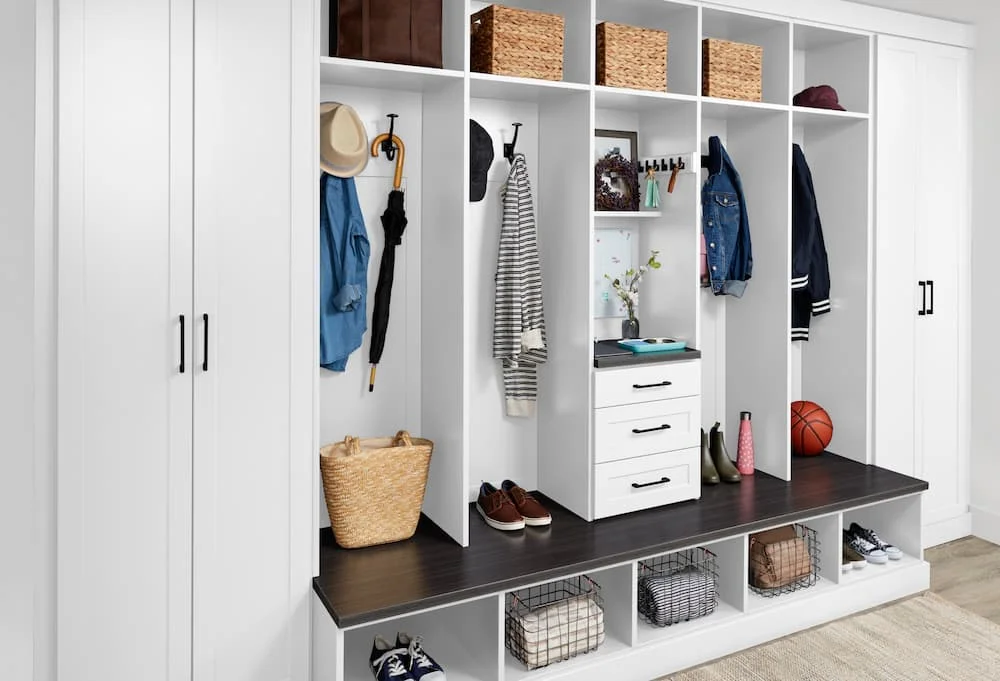
A well-designed mudroom does more than store shoes and coats, it actively protects your home. Rainwater, melting snow, and damp gear can quietly damage hardwood flooring, stain tile grout, and soak into carpeting if not properly contained. Without a structured system, moisture spreads quickly beyond the entryway. A thoughtfully planned mudroom with designated areas for wet shoes, hanging coats, and drip trays helps capture water at the source, preserving your interior surfaces and reducing long-term wear.
Beyond protecting materials, an organized mudroom significantly reduces daily stress. Searching for gloves during a snowstorm or scrambling to find rain boots during a sudden downpour adds unnecessary frustration to already busy moments. When essentials are stored in clearly defined, visible spaces, family members can grab what they need quickly and head out the door with confidence. This small shift in organization creates smoother mornings and calmer transitions throughout the day.
Structured storage also supports consistent family routines. Children and adults alike benefit from having designated spots for coats, shoes, backpacks, and seasonal gear. When every item has a clear home, returning it becomes second nature. Over time, this consistency minimizes clutter, encourages responsibility, and keeps the entryway orderly without constant reminders. A functional mudroom doesn’t just store belongings, it strengthens the rhythm and flow of daily life.
Core Elements of Functional Mudroom Storage
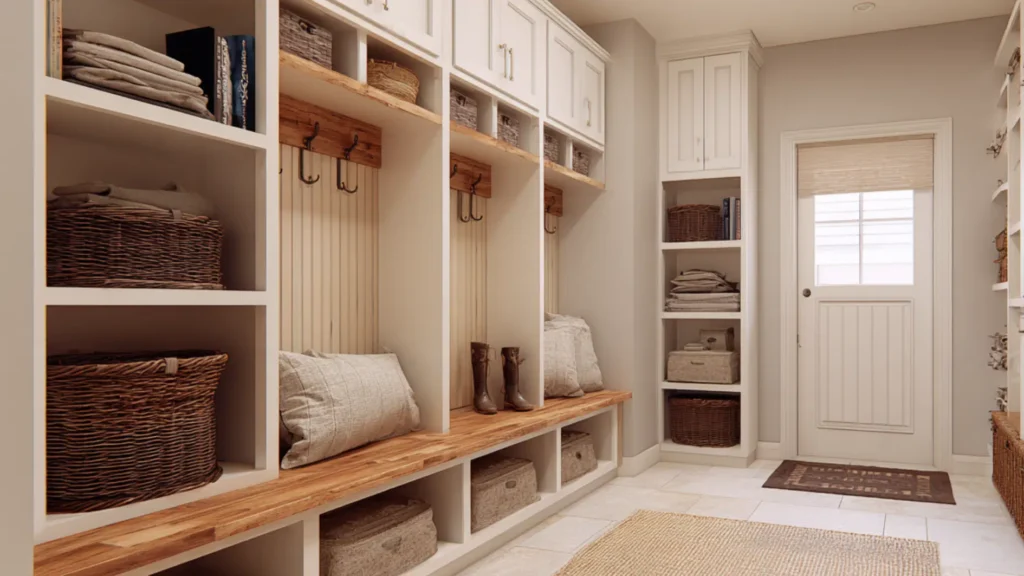
Durable Flooring
Water-resistant flooring is the foundation of any effective mudroom design. Because this space regularly encounters rainwater, melting snow, mud, and debris, surfaces must withstand constant exposure to moisture. Materials like tile, sealed concrete, or waterproof vinyl offer durability while making cleanup quick and simple. These options resist staining, warping, and long-term water damage, helping preserve the integrity of your home. Choosing the right flooring not only protects against wear but also ensures that daily messes can be wiped away effortlessly, keeping the area fresh and functional year-round.
Built-In Benches
Seating for Convenience
A sturdy, well-placed bench adds both comfort and practicality to a mudroom. It provides a stable place to sit while removing boots, changing shoes, or helping children get ready for school. Instead of balancing awkwardly or tracking dirt further inside, family members can pause comfortably at the entry point. Benches also create a visual anchor in the space, making the mudroom feel intentional rather than improvised.
Storage Beneath
The space beneath a bench is valuable real estate. Open cubbies allow for quick access to everyday shoes, while drawers keep smaller items neatly contained and out of sight. This under-seat storage keeps footwear organized and off the floor, preventing clutter from spreading. For seasonal gear like snow boots or rain accessories, designated compartments ensure items remain easy to locate without crowding the main walkway.
Vertical Cubbies
Vertical cubbies introduce structure and personalization to a shared space. By assigning each family member a designated section, coats, hats, backpacks, and sports gear remain separated and easy to find. This layout prevents wet or muddy items from mixing together, reducing mess and confusion. Individual cubbies also encourage accountability — when everyone has their own space, maintaining order becomes a shared habit rather than a constant reminder.
Wall Hooks
Wall hooks are simple yet highly effective for managing wet outerwear. Hanging coats, scarves, and bags allows them to air dry properly instead of piling up on benches or nearby furniture. Installing hooks at varying heights ensures accessibility for both adults and children, empowering younger family members to hang their belongings independently. When strategically placed, hooks create a streamlined, efficient entry system that supports quick transitions in and out of the home while keeping clutter under control.
Smart Solutions for Rainy Days
Managing wet and muddy gear requires thoughtful details that keep moisture contained and prevent long-term damage. Boot trays and drain mats placed near the entrance act as the first line of defense. Made from rubber or metal, these trays capture water, snow, and dirt directly from footwear, preventing puddles from forming on floors and protecting surrounding surfaces from stains and warping. By clearly defining where wet shoes belong, they also help maintain visual order in the space.
Ventilated shoe storage further supports cleanliness by promoting airflow. Open shelving allows damp shoes to dry faster, reducing the risk of odor buildup and mildew. Unlike closed bins that trap moisture, breathable storage keeps footwear fresh and ready for the next use. This simple design choice contributes significantly to maintaining a hygienic and low-maintenance mudroom.
Umbrella holders are another practical addition. Tall, stable containers positioned near the door keep umbrellas upright and contained, preventing dripping water from spreading across the floor. Instead of leaning umbrellas against walls or furniture, a designated holder creates a tidy, intentional look while protecting surrounding surfaces.
Keeping absorbent towels within easy reach adds an extra layer of preparedness. After heavy rain or snowy play, quick access to towels makes it easier to wipe down boots, dry off pets, or clean small spills immediately. With these thoughtful storage elements working together, your mudroom becomes a controlled, efficient space that handles messy weather with ease while keeping the rest of your home clean and protected.
Designing Mudroom Storage Around Your Family
Families with Young Children
For families with young children, accessibility is key. Lower wall hooks allow kids to hang their own coats and backpacks without assistance, building confidence and independence from an early age. Open cubbies positioned at child-friendly heights make it easier for little ones to store and retrieve their shoes, hats, and school items without frustration. Easy-to-reach bins for gloves, scarves, and small accessories reduce the morning scramble and encourage responsibility. When storage is designed around a child’s reach and routine, tidying up becomes part of their daily habit rather than a constant reminder from parents.
Active Households
Homes filled with sports practices, outdoor adventures, and busy schedules require expanded and flexible storage. Athletic shoes, uniforms, backpacks, helmets, and seasonal equipment can quickly overwhelm a standard entryway. Adjustable shelves allow the space to evolve as gear changes throughout the year, while deep drawers provide concealed storage for bulkier items. Dedicated zones for sports equipment prevent clutter from spilling into other areas of the home. A mudroom tailored for an active household keeps equipment organized, accessible, and ready for the next activity without creating chaos at the door.
Pet Owners
Pet owners benefit greatly from a mudroom designed with four-legged family members in mind. Incorporating designated storage for leashes, harnesses, waste bags, grooming tools, and pet-safe cleaning supplies keeps everything conveniently located near the entrance. Hooks for leashes, small drawers for accessories, and baskets for towels make it easy to manage muddy paws before pets roam through the house. Having these essentials in one organized area simplifies cleanup after walks or rainy outings, helping maintain a clean and comfortable home environment for both pets and people.
Custom Mudroom Storage Solutions
At St. James Closets, mudroom design focuses on practical elegance. Custom cabinetry, adjustable shelving, integrated benches, and labeled cubbies create an entryway that supports both function and visual order. Storage solutions are tailored to household size, activity levels, and regional climate considerations. A well-designed mudroom protects the rest of your home from weather-related mess while maintaining a cohesive interior aesthetic.
Common Mudroom Storage Mistakes
When designing a mudroom, certain pitfalls can quickly undermine organization and functionality. Overcrowding hooks is a frequent issue, hanging too many coats on a single hook not only reduces airflow, preventing items from drying properly, but also creates visual clutter and frustration when retrieving belongings. Ignoring proper drainage is another common mistake. Without boot trays or drain mats, water from wet shoes and snow can seep into flooring, causing damage to hardwood, tile, or carpet and creating slippery, unsafe conditions.
Finally, a lack of individual zones can lead to confusion and misplaced items. Shared storage areas without clear assignments make it difficult for family members to know where their coats, bags, or shoes belong, often resulting in clutter that spreads beyond the mudroom. By avoiding these missteps, you can maintain a mudroom that is both organized and functional, even during messy weather.
Creating a Calm First Impression
Your mudroom is more than just a functional entry, it sets the tone for your home. Even on rainy afternoons or snowy mornings, a well-organized mudroom conveys a sense of order, care, and thoughtful design. Clean lines, intentional storage solutions, and clearly designated zones for shoes, coats, bags, and accessories create a space that feels calm and welcoming. When every item has its place, the mudroom not only manages mess efficiently but also reflects the overall style and organization of your home, making every arrival and departure smooth and stress-free.
Long-Term Benefits of Organized Mudroom Storage
A thoughtfully designed mudroom offers far more than storage, it actively enhances the functionality and flow of your home.
Protects flooring and interior spaces – By containing wet shoes, dripping coats, and muddy gear, a mudroom shields hardwood, tile, and carpeted areas from water damage, stains, and scratches. Trays, mats, and designated storage zones prevent moisture from spreading, keeping your home’s interior surfaces clean and well-preserved.
Reduces cleaning time – With everything in its proper place, messes are easier to manage. Shoes, umbrellas, and outerwear are contained, meaning less sweeping, mopping, or wiping down surfaces. Quick cleanup becomes possible even during busy mornings or after heavy storms, saving valuable time and effort.
Encourages responsibility among family members – When each family member has their own cubby, hook, or drawer, it’s easier for children and adults alike to manage their belongings independently. This promotes accountability, instills habits of tidiness, and reduces the need for constant reminders or corrections.
Creates smoother morning and evening routines – An organized mudroom supports daily transitions by keeping essential items accessible. Kids can grab backpacks and shoes quickly, parents can locate keys and umbrellas with ease, and everyone moves through busy mornings and evenings without unnecessary stress or delays.
Supports overall home organization – Beyond the entryway, a well-planned mudroom reinforces a culture of order throughout the home. It prevents clutter from spilling into hallways, living rooms, or kitchens, serving as a central hub that keeps everyday items contained, accessible, and functional. Over time, this contributes to a more structured, calm, and efficient household.
Rain and snow don’t have to mean clutter and chaos. With thoughtfully designed mudroom storage, your home stays protected and your daily routines remain smooth and efficient, no matter the weather. At St. James Closets, we craft custom entryway systems that blend durability with refined design, tailored to your family’s needs. Schedule a consultation today and discover a mudroom solution built to handle every season with ease, style, and lasting functionality.
Rain and snow don’t have to mean clutter and chaos. With thoughtfully designed mudroom storage, your home stays protected and your routines stay efficient, no matter the forecast. At St James Closets, we create custom entryway systems that combine durability with refined design. Contact us today to explore a mudroom solution built to handle every season with confidence and ease.