Functional laundry room folding station can make laundry day easier by providing a dedicated space to fold, sort, and organize clean clothes. A well-designed laundry room should do more than accommodate a washer and dryer.
It should provide a practical workflow for sorting, washing, drying, folding, and putting away clothes. One of the most useful features in this space is a dedicated folding station.
With the right countertop, storage, and layout, a laundry folding area can help reduce clutter and make everyday laundry tasks easier to manage. Whether you have a spacious utility room or a compact laundry area, thoughtful planning can help you make better use of the available space.
Here’s how to design a functional laundry room folding station
1.Choose the Right Location for Your Folding Station
The location of your folding station affects how easily you can move through laundry tasks. Ideally, the folding area should be close to the dryer and provide enough room to handle clean clothes without blocking walkways or appliance doors.
Before selecting a location, consider the overall workflow:
-
- Where do you place dirty laundry before washing?
- How do you transfer wet clothes to the dryer or drying rack?
- Where will you fold clean clothes?
- Where will folded laundry be sorted and stored?
Keeping these activities connected can reduce unnecessary movement and make the room more efficient.
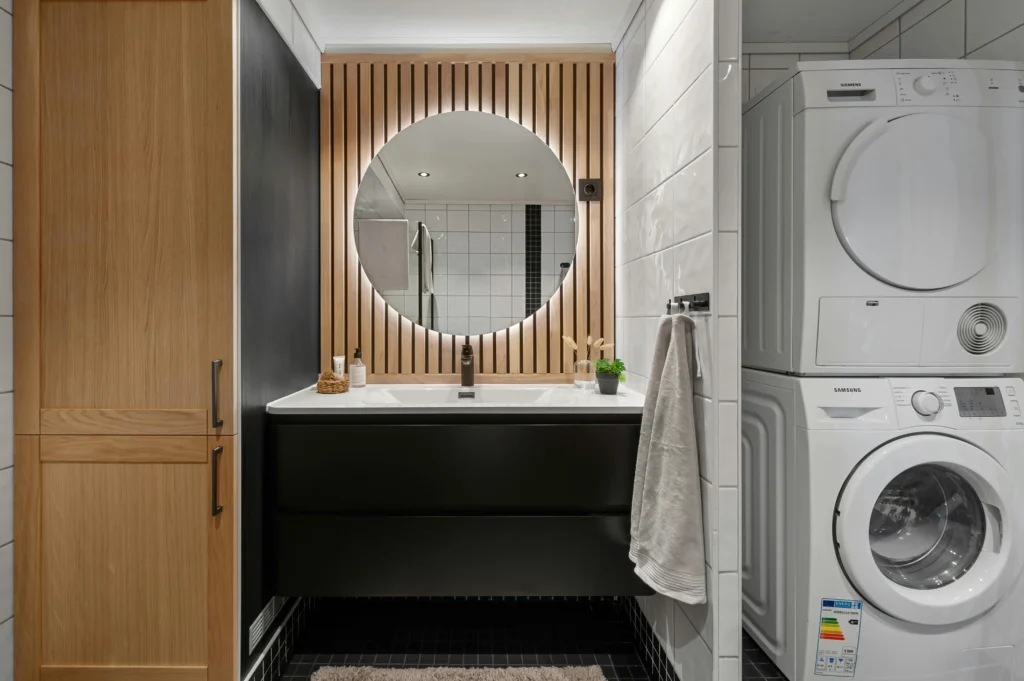
If your laundry room is narrow, a countertop positioned above front-loading appliances may provide a useful folding surface without requiring a separate table. However, the installation must accommodate the appliances’ dimensions, access requirements, and manufacturer’s recommendations.
For a more comprehensive layout, explore St. James Closets’ custom laundry room design services.
2.Select a Countertop With Enough Folding Space
A folding station needs enough usable surface area to handle the types of laundry your household produces.
A small surface may work for one or two people, while a larger household may benefit from a wider counter that allows clothes to be folded and sorted into separate piles.
When planning the countertop, consider:
-
- The number of people in your household
- The volume of laundry handled at one time
- The types of clothing you regularly fold
- The available wall length and room dimensions
- The clearance required to open appliances and drawers
A durable, easy-to-clean surface is generally a practical choice for a laundry room. Ask your designer about suitable materials and finishes based on your intended use and maintenance preferences.
Avoid making the countertop so deep or wide that it restricts access to appliances or creates an awkward working position.
3.Consider the Right Countertop Height
Countertop height can influence comfort when folding laundry, particularly when the task takes several minutes at a time.
A surface that is too low may encourage repeated bending, while one that is too high may make folding uncomfortable. The most suitable height depends on your own height, the appliances beneath the counter, and how you prefer to work.
If possible, test a similar-height surface before finalizing the design. Consider whether you can comfortably reach the full depth of the counter and place folded garments without excessive bending or stretching.
For a countertop above a washer and dryer, the appliance height may determine the available working surface. A designer should account for these dimensions before recommending a final configuration.
4.Add Storage Beneath and Around the Folding Area
A folding station becomes more useful when the surrounding storage supports the tasks performed there.
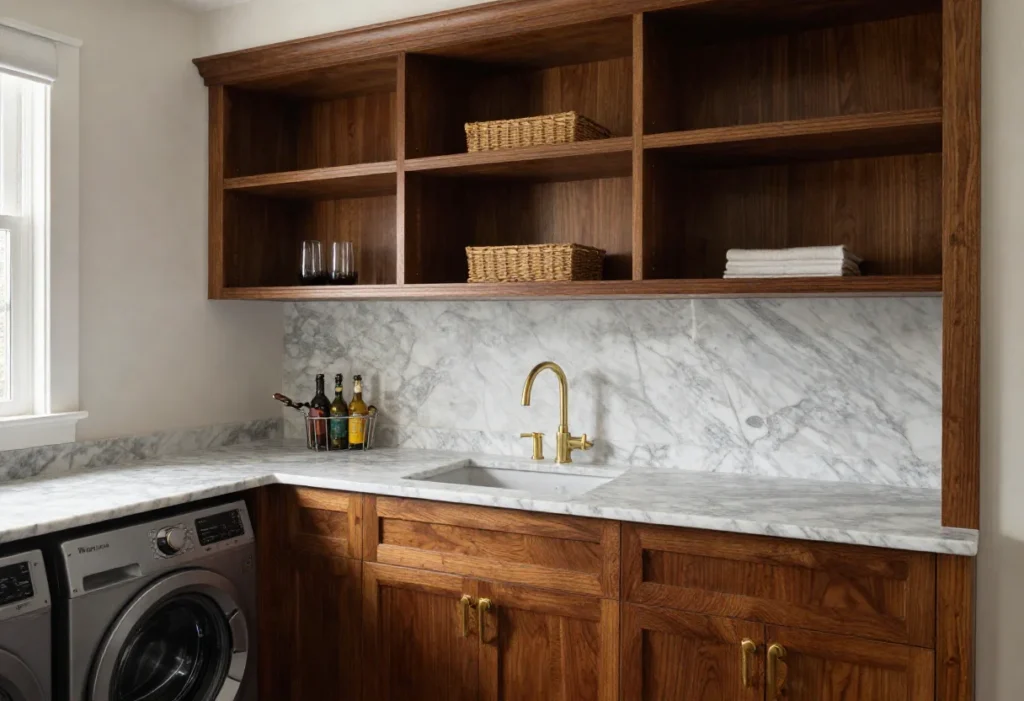
Cabinets and drawers can provide dedicated spaces for laundry supplies, cleaning cloths, spare linens, and other household essentials. Open shelves can keep frequently used items accessible, while closed cabinets help create a cleaner visual appearance.
Consider organizing storage into practical categories:
- Laundry essentials: Detergent, stain removers, and other products used during washing.
- Clothing care: Items such as lint rollers, garment-care tools, and fabric-care accessories.
- Household linens: Towels, sheets, and other clean textiles that need a designated storage area.
- Sorting supplies: Baskets and containers for separating clean clothing by person, room, or destination.
Keep frequently used supplies within comfortable reach, and store potentially hazardous cleaning products securely and according to their labels.
For inspiration, see how St. James Closets approaches laundry room organization and custom cabinetry.
5.Create a Sorting System That Fits Your Household
A folding station can become cluttered quickly if clean clothing has nowhere to go after it is folded.
One solution is to create separate sorting zones. Depending on your household, you may want designated baskets for different family members, separate piles for towels and clothing, or containers for items that need ironing or special care.
If several people share laundry responsibilities, make the system easy for everyone to understand and maintain.
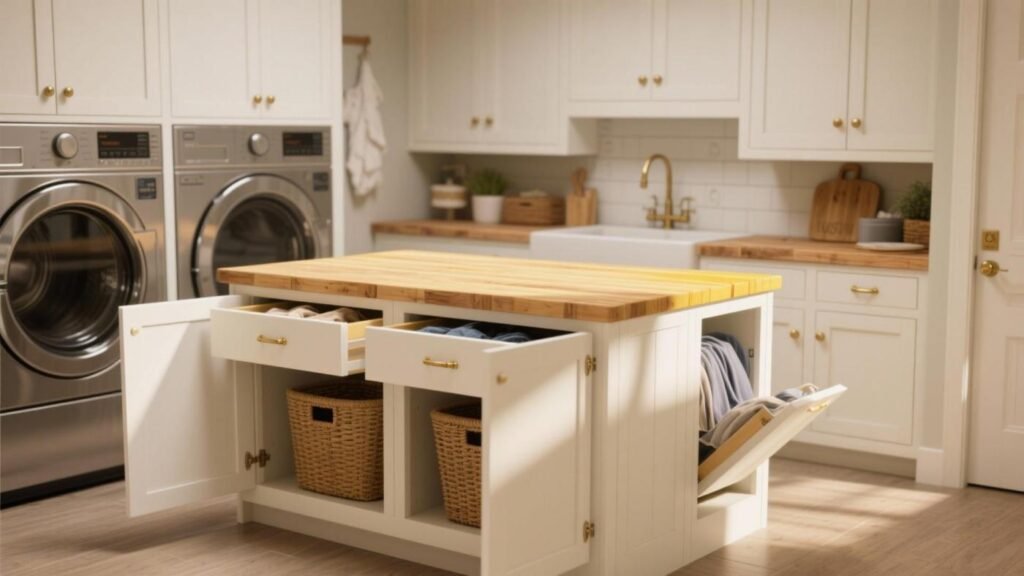
For example, you could use labeled baskets beneath the countertop or dedicate a nearby shelf to each household member. The aim is to keep folded clothing organized until it can be put away.
The right system depends on the number of people in your household, the available storage, and the way you prefer to manage laundry.
6.Make the Most of Vertical Space
When floor space is limited, the walls above and around a folding station may provide useful storage opportunities.
Depending on the room layout, options include:
-
- Shelves for baskets and folded towels
- Cabinets for supplies and household essentials
- Wall-mounted drying racks
- Hanging rails for garments that need to air-dry
- Hooks for reusable laundry bags or lightweight accessories
Before installing shelves or cabinets, check their height and depth. Items should remain accessible without making the folding area feel crowded.
Leave enough room to work comfortably at the counter, and avoid placing heavy items where they could fall onto the working surface.
A carefully planned combination of vertical storage and a practical countertop can help a compact laundry room accommodate several functions without requiring additional floor space.
7.Plan Lighting for the Folding Station
Good lighting helps you distinguish colors, inspect garments, identify stains, and fold clothes accurately.
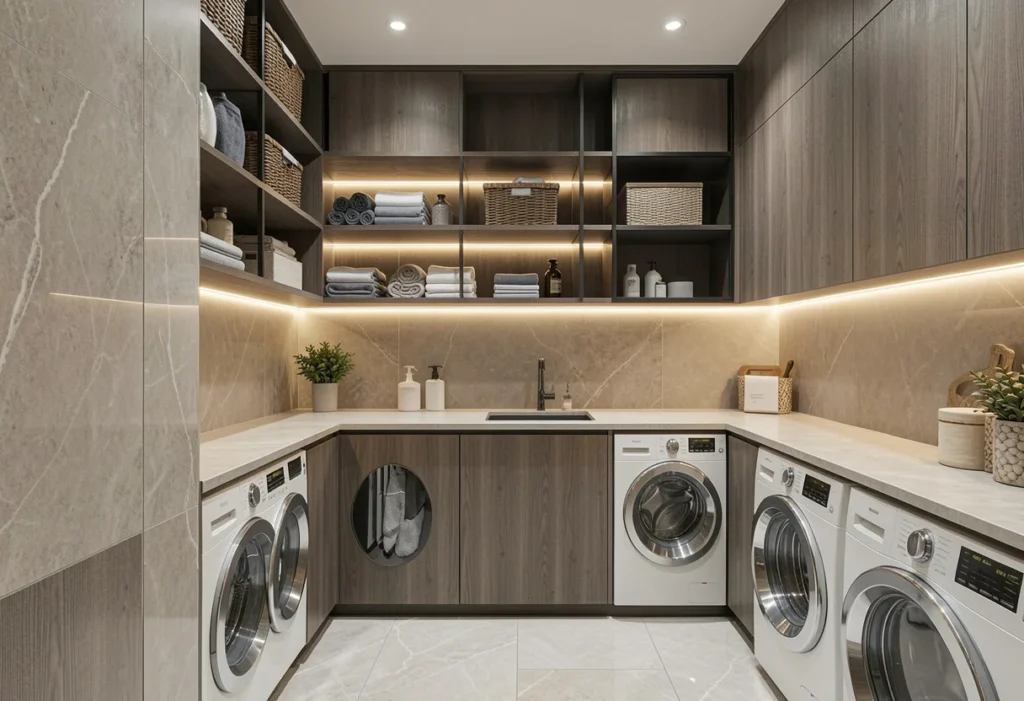
If the folding station is positioned beneath cabinets or in a corner, the main ceiling light may not provide sufficient illumination. Additional task lighting can help make the work surface easier to use.
Consider the placement of ceiling lights, under-cabinet lighting, and natural light from windows. Aim to illuminate the countertop evenly while minimizing shadows and glare.
Lighting should also suit the overall room design. A clean, well-lit laundry area can feel more comfortable and make routine household tasks less cumbersome.
8.Leave Enough Room for Movement
A folding station should make the laundry process easier, not create another obstacle in the room.
Before finalizing the layout, check the clearance around the washer, dryer, cabinets, and any nearby doors. Make sure appliance doors can open fully and that baskets can be moved without blocking the main walkway.
If several people use the room at once, consider whether one person can fold clothes while another accesses the appliances.
In smaller laundry rooms, a wall-mounted or compact folding surface may be more practical than a freestanding table. In larger spaces, a wider countertop or dedicated work surface may provide additional flexibility.
The best design is one that supports your actual routine while allowing comfortable movement throughout the room.
9.Choose Finishes That Are Practical to Maintain
Laundry rooms experience regular handling, moisture, cleaning products, and occasional spills. Choosing suitable materials can help keep the folding station looking good over time.
When comparing finishes, consider durability, cleaning requirements, resistance to everyday wear, and compatibility with the rest of the room.
Ask your designer which materials are appropriate for the intended installation and how they should be maintained.
It is also worth considering the overall appearance of the room. Coordinating cabinet finishes, countertop colors, hardware, and lighting can help the laundry area feel like an intentional part of your home rather than a purely functional space.
Common Laundry Folding Station Design Mistakes
A folding station can look attractive but still be difficult to use if its layout does not support everyday tasks.
Avoid these common mistakes:
- Choosing a countertop that is too small: A limited surface can make it difficult to fold and sort several items at once.
- Ignoring appliance clearances: Poorly planned counters and cabinets can interfere with doors, drawers, or routine maintenance.
- Placing supplies out of reach: Frequently used products should be easy to access without interrupting the workflow.
- Overloading the countertop: A folding station loses its usefulness when it becomes permanent storage for unrelated items.
- Forgetting where clean laundry will go: Without designated baskets, shelves, or cabinets, folded clothing can quickly accumulate on the work surface.
- Adding storage without considering movement: Cabinets and shelves should improve organization without making the room difficult to navigate.
A good design balances work surface, storage, lighting, and circulation rather than maximizing only one feature.
Should You Consider a Custom Laundry Room Design?
A custom laundry room may be worth considering when a standard arrangement does not provide enough folding space, accessible storage, or room to move comfortably.
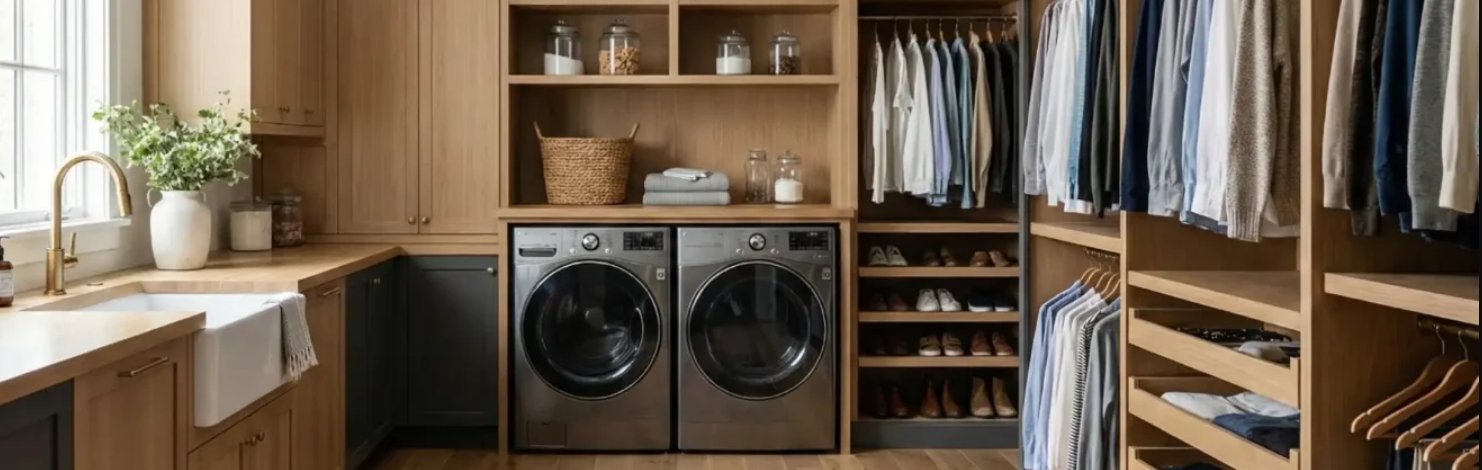
A tailored design can account for the room’s dimensions, appliance placement, household routines, and preferred storage features. It may combine a folding countertop with cabinets, shelving, baskets, and dedicated spaces for laundry supplies.
Not every laundry room needs a complete redesign. Reorganizing existing shelves or adding a suitable work surface may be sufficient for some households. However, if your current layout repeatedly creates clutter or makes laundry tasks difficult, a customized plan may help address the underlying problems.
St. James Closets offers tailored laundry room storage and cabinetry solutions designed around the available space and the homeowner’s needs.
Design a Laundry Room That Works for Your Routine
A functional folding station can make laundry easier to organize by giving clean clothing a dedicated place to be folded, sorted, and prepared for storage.
Start by assessing your available space, choosing a comfortable work surface, and identifying the storage features that support your household’s routine. Then consider lighting, countertop height, and movement around appliances before finalizing the layout.
With thoughtful planning, a laundry folding station can help create a more organized and practical home utility space.
Ready to improve your laundry room? Visit St. James Closets to explore custom laundry room solutions and request a design consultation.