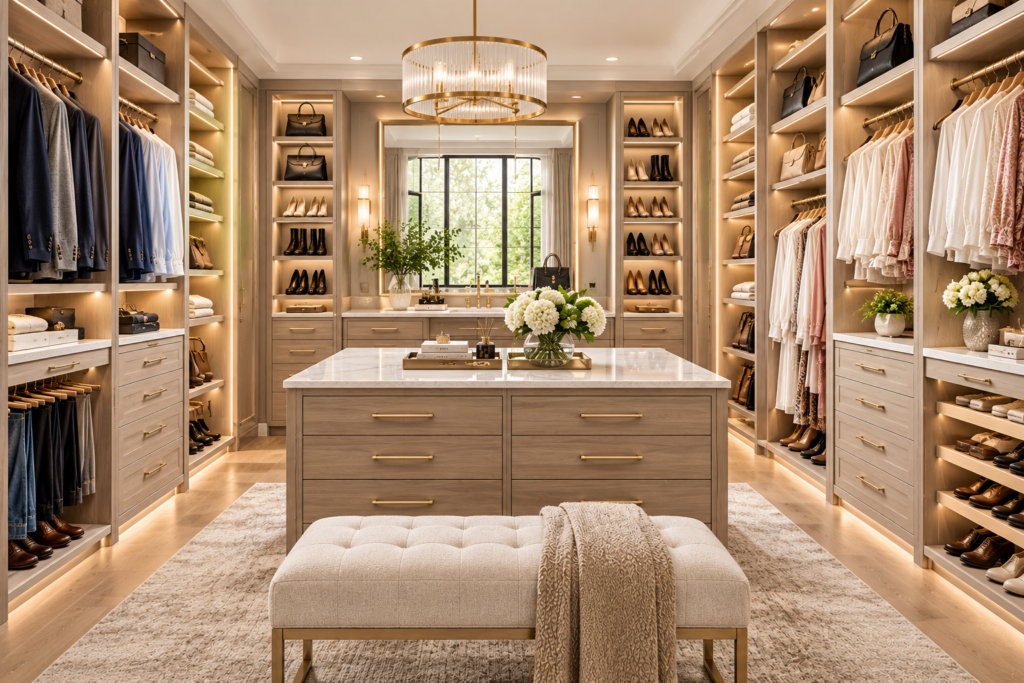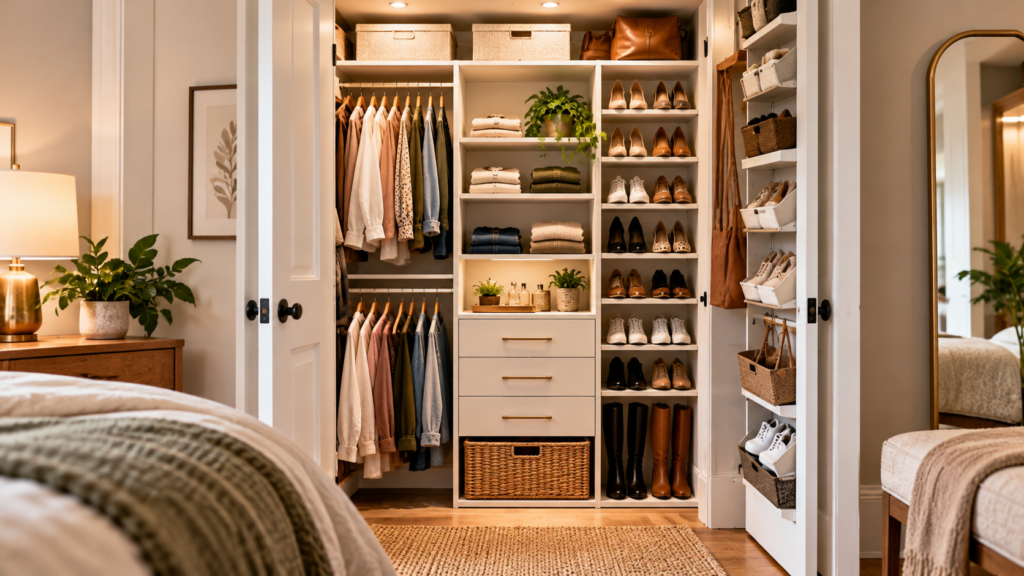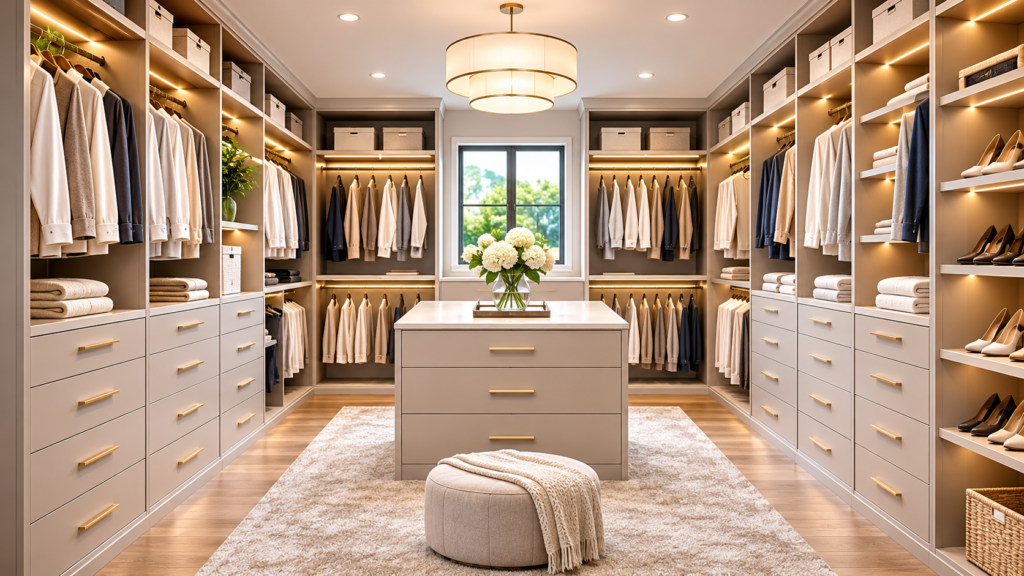
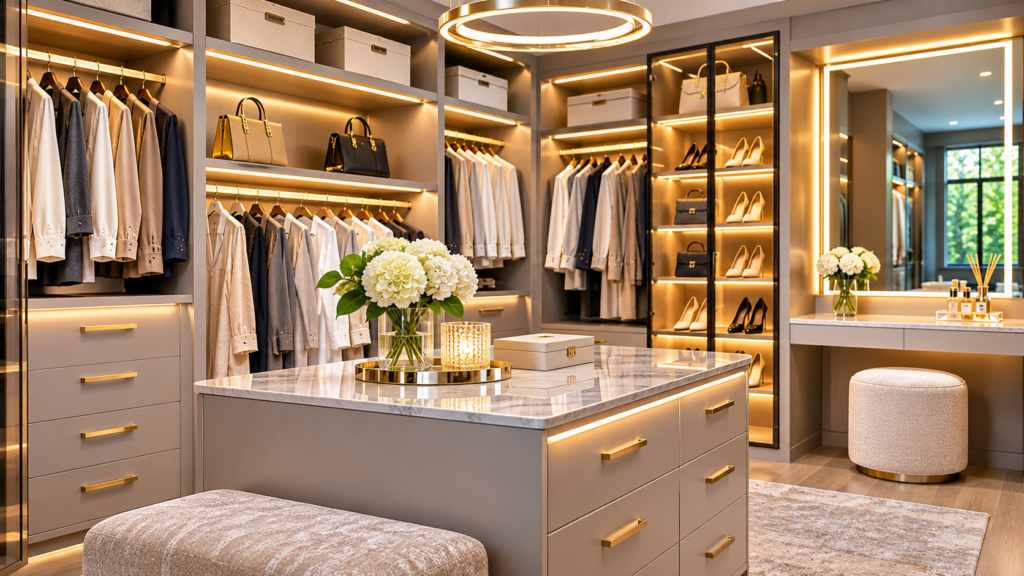
A beautifully designed closet should do more than provide storage. It should make everyday routines easier, showcase your wardrobe, and create an atmosphere that feels comfortable and refined.
While shelving, drawers, and hanging sections often receive the most attention during closet planning, lighting is just as important to the overall experience.
The right lighting can make clothing easier to identify, improve visibility inside drawers, highlight architectural details, and give a custom closet the polished appearance of a luxury dressing room. More importantly, a well-planned lighting system combines practical illumination with subtle design elements.
Whether you are planning a spacious walk-in closet or upgrading a smaller storage area, understanding how different lighting layers work together can help you create a space that looks beautiful and functions effortlessly.
Why Closet Lighting Deserves More Attention
Closet lighting is sometimes treated as a finishing detail added after the storage layout has been completed. However, lighting decisions can influence how the entire space is designed.
A poorly lit closet may have beautiful finishes and carefully planned storage, yet still feel inconvenient to use. Shadows can make it difficult to distinguish clothing colors, dark corners can hide stored items, and insufficient illumination can make drawers and shelves less practical.
Thoughtful lighting addresses these issues while enhancing the appearance of the cabinetry.
A well-planned closet lighting system can:
-
- Improve visibility across hanging and folded clothing
- Make drawers and shelves easier to use
- Highlight premium finishes and architectural details
- Create a more inviting dressing environment
- Reduce dark areas and distracting shadows
- Support a consistent, cohesive interior design
The goal is to balance functionality and atmosphere rather than relying on a single overhead light.
1. Start with Ambient Lighting
Ambient lighting provides the general illumination for the entire closet. It establishes the overall brightness of the room and helps create a comfortable environment.
Depending on the size and layout, ambient lighting may include recessed ceiling lights, flush-mount fixtures, or other ceiling-mounted solutions.
When planning ambient lighting, consider the following:
- Room size and ceiling height: Larger closets may require multiple fixtures to distribute light evenly. Ceiling height also influences fixture placement and the way light spreads throughout the room.
- Layout and circulation: Lighting should cover the main walking areas without leaving dark sections between storage units.
- Color consistency: Using compatible light sources throughout the space helps create a more balanced appearance.
Ambient lighting should provide a comfortable foundation without being so bright that it overwhelms the room or creates harsh reflections.
2. Add Task Lighting Where Visibility Matters Most
Task lighting focuses on specific areas where additional illumination makes everyday activities easier.
In a closet, these areas often include drawers, accessory storage, dressing surfaces, and sections where clothing is selected or arranged.
Examples include:
-
- Lighting beneath shelves to illuminate lower hanging sections
- Integrated lights inside selected drawers
- Focused illumination around a dressing mirror
- Lighting near accessory organizers
- Additional illumination around a closet island or countertop
Task lighting is especially valuable in deeper storage areas where overhead fixtures may not provide sufficient visibility.
Rather than illuminating every compartment equally, the design should prioritize locations where people need to see details clearly.
3. Use Integrated LED Lighting for Shelves and Hanging Areas
Integrated LED lighting is one of the most effective ways to enhance a custom closet.
LED strips or linear fixtures can be incorporated into shelving, cabinet panels, hanging sections, and display niches. When positioned carefully, they illuminate stored items while maintaining a clean, streamlined appearance.
Common applications include:
- Under-shelf lighting: Provides additional visibility for clothing and accessories stored on lower levels.
- Vertical cabinet lighting: Illuminates tall sections and helps reduce shadows along the sides of storage compartments.
- Hanging-rod lighting: Makes it easier to identify garments, particularly in deeper wardrobe sections.
- Display lighting: Highlights handbags, shoes, decorative objects, and other items displayed on open shelves.
The placement of LED fixtures matters as much as the fixtures themselves. Poor positioning can create glare, visible light hotspots, or unwanted shadows.
For a refined result, lighting should be planned alongside the cabinet layout rather than added as an afterthought.
4. Choose the Right Color Temperature
Color temperature affects how a closet feels and how accurately clothing colors appear under artificial light.
It is measured in Kelvin (K), with lower values generally producing warmer light and higher values producing cooler light.
Common options include:
-
- 2700K: Warm, soft illumination that creates a relaxed and inviting atmosphere.
- 3000K: A warm-neutral appearance that works well in many residential interiors.
- 3500K: A more balanced neutral tone that can provide a clean appearance without feeling overly cool.
- 4000K: A cooler white light that may be useful where clear visual distinction is a priority.
For many residential closets, warm or neutral-white lighting creates a comfortable environment. However, the best choice depends on the finishes, wall colors, natural light, and overall design direction.
Color consistency is also important. Mixing noticeably different color temperatures within the same closet can make the space feel visually disconnected.
Homeowners who frequently select outfits or coordinate clothing colors may also want to consider how accurately the lighting represents fabric colors.
5. Highlight Shelves, Accessories, and Display Areas
A custom closet often includes more than basic hanging and folded storage. Open shelving, glass-front displays, shoe sections, and accessory compartments can become important visual features.
Accent lighting helps bring attention to these areas.
For example, subtle lighting inside a handbag display can create a boutique-inspired appearance. Lighting beneath floating shelves can add depth, while illuminated shoe displays make collections easier to view.
The key is to use accent lighting selectively. Not every shelf needs to become a focal point. Highlighting a few carefully chosen areas usually creates a more sophisticated result than illuminating every surface.
Accent lighting should complement the materials and finishes rather than compete with them.
6. Plan Mirror and Dressing Area Lighting Carefully
A dressing mirror serves a different purpose from decorative display lighting. It needs to provide useful illumination while minimizing shadows on the face and clothing.
A single overhead light may create shadows around the eyes and under the chin, making it less effective for getting ready.
A better approach is to consider lighting positioned around or beside the mirror so that illumination reaches the face more evenly.
When planning a dressing area, consider:
-
- The size and position of the mirror
- The direction from which light reaches the user
- Whether the fixture creates glare in the mirror
- The relationship between mirror lighting and ambient lighting
- The appearance of clothing colors under the selected light source
The objective is comfortable, balanced illumination that supports everyday grooming and outfit selection.
7. Consider Motion Sensors and Convenient Controls
Lighting controls influence how comfortable a closet is to use.
Motion sensors can automatically activate lighting when someone enters the space. Door-activated switches may also work well for enclosed cabinets or selected storage compartments.
Other useful options include:
-
- Dimmable lighting for adjustable brightness
- Separate switches for ambient and accent lighting
- Dedicated controls for dressing areas
- Integrated sensors for drawers or cabinets
- Smart lighting controls where compatible with the home’s system
The right control arrangement depends on how the closet is used.
For example, someone who frequently accesses a walk-in closet throughout the day may prefer automatic activation, while a homeowner who wants more control over the room’s atmosphere may prefer separate dimmable lighting zones.
8. Coordinate Lighting with Closet Materials and Finishes
Lighting does not interact with every surface in the same way. Glossy finishes may reflect light more noticeably, while darker cabinetry can absorb more light and make certain sections appear less illuminated.
Glass, metal hardware, woodgrain finishes, and textured surfaces also influence the final appearance. For this reason, lighting should be considered during material selection.
A few design considerations can help create a cohesive result:
- Light-colored finishes: Often reflect more light and can help a closet feel brighter.
- Dark cabinetry: May benefit from carefully positioned integrated lighting to improve visibility.
- Glass-front displays: Can create an elegant focal point when paired with subtle interior illumination.
- Woodgrain finishes: Often work well with warm or neutral lighting, depending on the desired atmosphere.
The relationship between lighting and materials is especially important in luxury closets, where small details contribute significantly to the overall impression.
9. Think About Installation, Wiring, and Long-Term Maintenance
A successful lighting design must also work behind the finished surfaces. Before installation, the lighting plan should account for power requirements, wiring routes, fixture access, switching arrangements, and compatibility with the selected cabinetry.
Important considerations include:
-
- Confirming fixture dimensions and mounting requirements
- Planning concealed wiring routes before cabinetry is installed
- Coordinating electrical work with the closet layout
- Selecting fixtures suitable for their intended location
- Providing access to components that may require future servicing
- Confirming compatibility between LED fixtures, drivers, dimmers, and controls
Electrical connections and wiring should be handled by qualified professionals in accordance with applicable local requirements. Planning these details early helps avoid visible wiring, unnecessary modifications, and difficult maintenance after the closet is complete.
10. Build a Lighting Plan Around the Way You Use Your Closet
There is no single lighting arrangement that works for every home. A large walk-in closet with an island, display shelves, and a dedicated dressing area will have different requirements from a compact reach-in closet.
The most effective approach is to begin with the storage layout and identify where additional illumination will make the greatest difference.
For example:
- A luxury walk-in closet: May benefit from ambient ceiling lighting, integrated shelf illumination, accent lighting, and dedicated mirror lighting.
- A compact reach-in closet: May need focused LED lighting near hanging sections and shelves to improve visibility without overwhelming the space.
- A closet with an island: Can incorporate task lighting around the countertop and subtle accent lighting to highlight the central feature.
- A display-focused wardrobe: May benefit from carefully positioned lighting inside selected shelving and glass-front sections.
A lighting plan should support the actual storage configuration, not simply follow a standard fixture arrangement.
Custom Closet Lighting Planning Checklist
Before finalizing a closet design, review these important details:
-
- Is the entire closet adequately illuminated?
- Are there dark corners or areas hidden by shelving?
- Do hanging sections have sufficient visibility?
- Would integrated LED lighting improve shelf or drawer access?
- Is the selected color temperature consistent?
- Does the mirror area provide balanced illumination?
- Are display shelves and accessory sections highlighted appropriately?
- Are lighting controls convenient for everyday use?
- Have wiring and power requirements been planned?
- Can fixtures and drivers be accessed for maintenance?
Reviewing these points during the design stage helps create a lighting system that feels intentional and works naturally with the storage layout.
Bring Your Custom Closet Design Together with Thoughtful Lighting
A well-designed closet is a combination of smart storage, quality materials, carefully selected finishes, and lighting that supports the way you live.
From integrated LED shelves to comfortable dressing-area illumination, each lighting choice contributes to a space that is easier to use and more enjoyable to experience.
At St. James Closets, every custom closet is planned around the homeowner’s space, preferences, and daily routines. Lighting, finishes, storage features, and layout details can be considered together to create a cohesive design.
Explore our custom walk-in closet design solutions to see how a thoughtfully planned storage system can elevate your home.
Ready to discuss your project? Book a custom closet design consultation and start planning a space that brings together functionality, comfort, and refined style.